
AI-Powered Ligand-Based Design Targeting YCK1 and YCK2 in Saccharomyces cerevisiae: Implications for Modulating Kinase Signaling Pathways in Drug Discovery
Saad Harrizi1,2✉, Youssef Zaidoune3, Raoufi Amal1,2, Ghatesse Manal1,2, Kamali Yousra1,2, Tabouktirt Yasmine1,2, Cherki Mounia1,2, Mostafa Kabine1,2
- 1 Laboratoire Santé, Environnement et Biotechnologie (LSEB), Faculté Des Sciences Ain Chock,
- 2 Université Hassan II de Casablanca, BP5366 Maarif, Casablanca 20100, Morocco
- 3 Département d’Informatique, Laboratoire de Technologie de l’Information et Modélisation, Faculté des Sciences Ben M’sik, Université Hassan II de Casablanca, Maroc.
Received 30 October 2026 · Accepted 31 October 2026 · Published 31 October 2026 · Corrected 9 November 2026
DOI: https://doi.org/10.5281/zenodo.23839401
Article PDF · Original poster (PDF)
- views
- 15
- downloads
- 9
- countries
- 6
Since publication · journal site and Zenodo archive · robots excluded
Abstract
Introduction
This study utilizes AI-powered ligand-based design to target YCK1 and YCK2 in Saccharomyces cerevisiae to discover small-molecule inhibitors that modulate kinase signaling pathways. These kinases are potential drug targets due to their role in critical signaling pathways involved in cancers and neurodegenerative diseases.
Materials and methods
The 3D structures of YCK1 and YCK2 were obtained using homology modeling with AlphaFold. Ligands were generated using the LiGAN tool, which employs deep learning to design novel ligands with predicted high binding affinities. Molecular docking simulations were performed using DiffDock to predict ligand-protein interactions. Molecular dynamics simulations with GROMACS assessed the stability of ligand-protein complexes. ADMET properties were predicted using the ADMET-AI tool to evaluate pharmacokinetic profiles and drug-likeness.
Results
The 3D structure of YCK1/YCK2 was modeled highlighting key domains for ligand binding. Docking and molecular dynamics simulations showed strong binding affinities and stable interactions between ligands and YCK1 active site residues SER831 and GLY830, supported by hydrogen bonding, pi-pi stacking, and hydrophobic contacts. RMSD, hydrogen bond, and Rg plots confirmed complex stability over 100 ns. ADMET radar plots indicated favorable pharmacokinetic properties, including good solubility and polarity, supporting drug-like characteristics.
Conclusion
AI-driven ligand-based design identified stable inhibitors for YCK1 and YCK2 with strong binding affinities and favorable pharmacokinetic profiles. These ligands could serve as leads for developing therapeutic agents targeting kinase signaling pathways.
Original poster
References
- Jumper, J., et al. (2021). Highly accurate protein structure prediction with AlphaFold. Nature, 596(7873), 583-589.
- Stokes, J. M., et al. (2020). A deep learning approach to antibiotic discovery. Cell, 180(4), 688-702.
- Trott, O., & Olson, A. J. (2010). AutoDock Vina: Improving the speed and accuracy of docking with a new scoring function, efficient optimization, and multithreading. Journal of Computational Chemistry, 31(2), 455-461.
- Berman, H. M., et al. (2000). The Protein Data Bank. Nucleic Acids Research, 28(1), 235-242.
Related posters
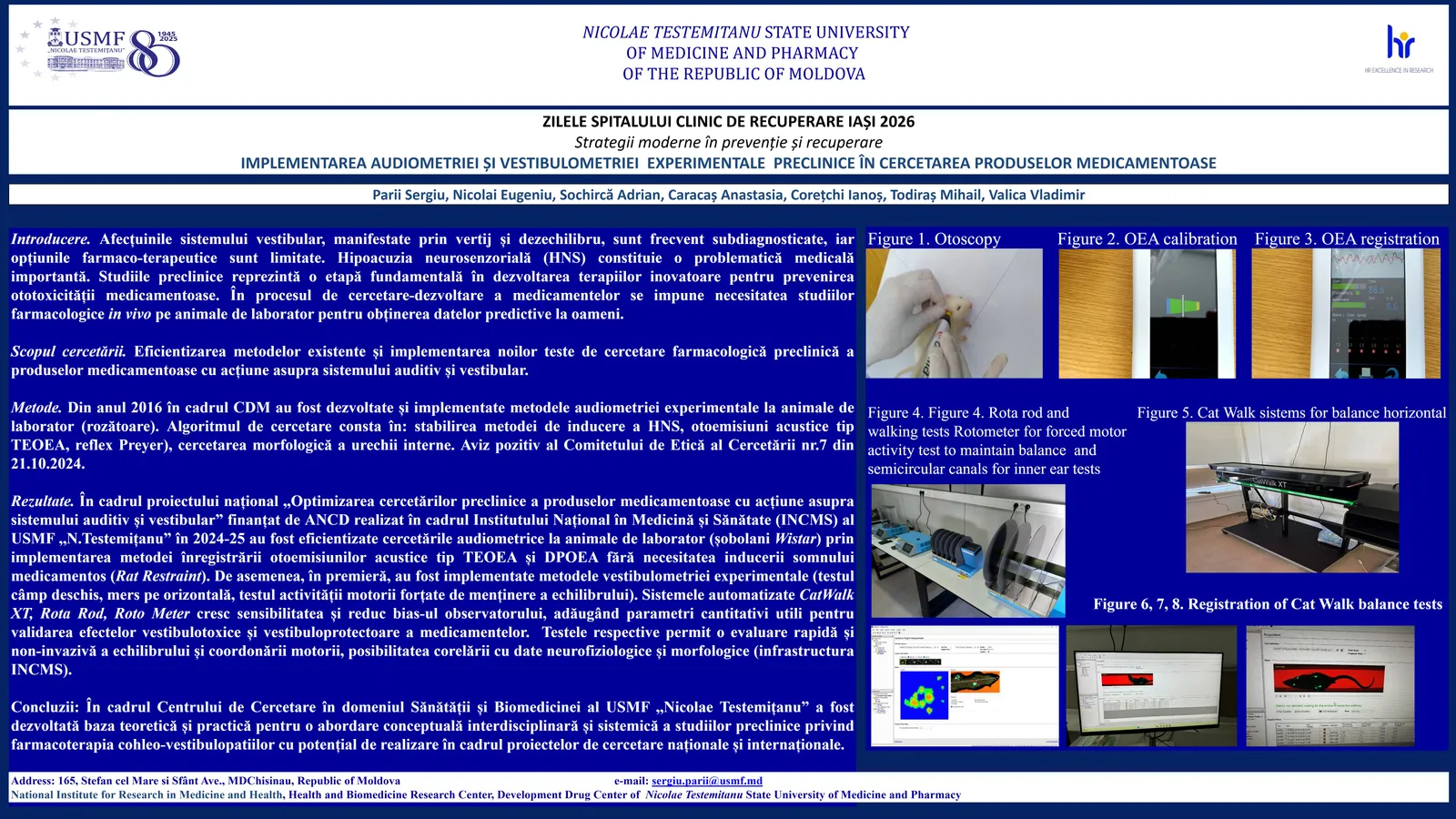 Pharmacology & TherapeuticsImplementation of experimental audiometry and vestibulometry in the preclinical research of medicinal productsS. Parii, E. Nicolai, A. Sochirca and 4 others
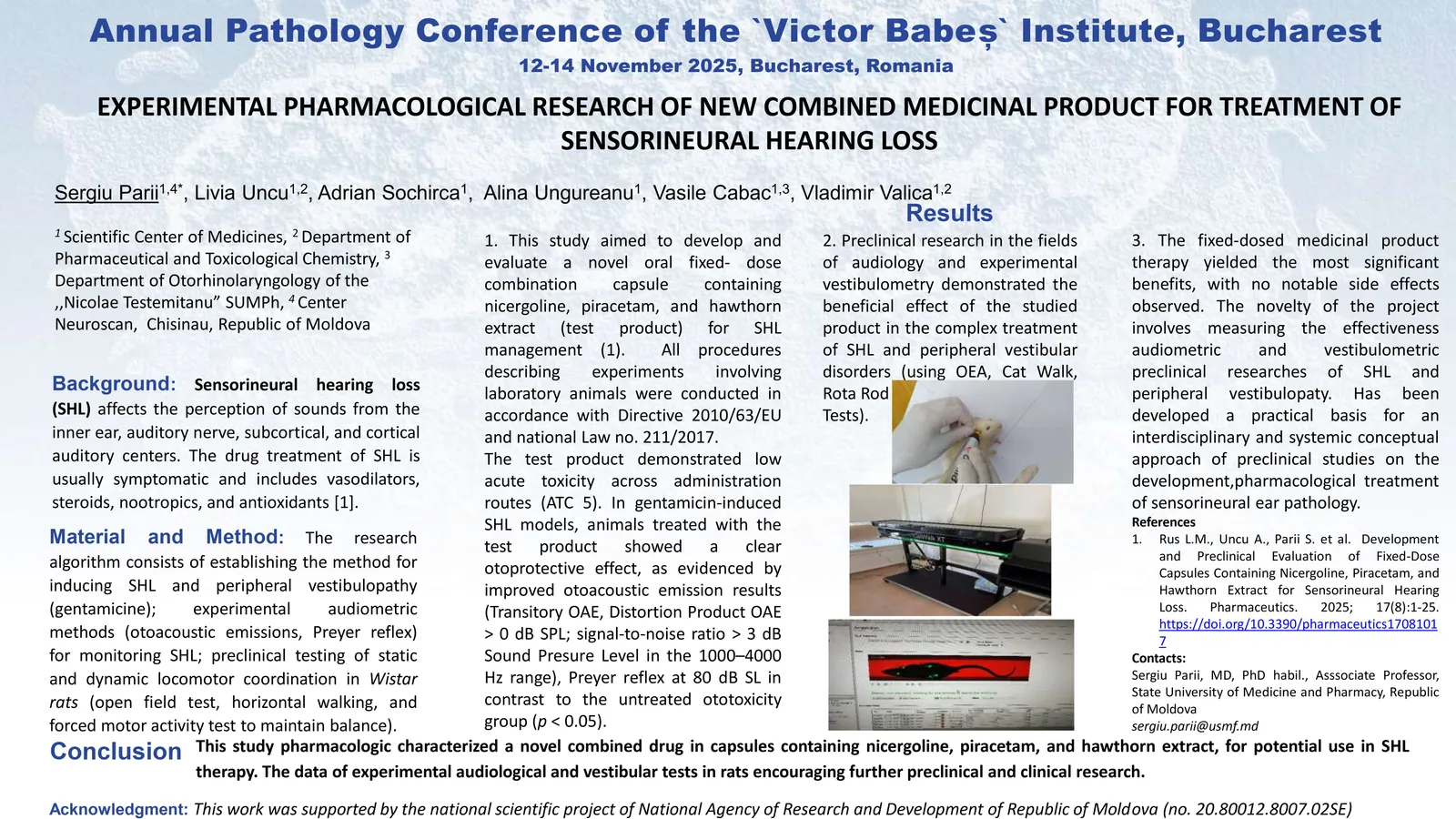 Pharmacology & TherapeuticsExperimental Pharmacological Research of New Combined Medicinal Product for Treatment of Sensorineural Hearing LossS. Parii, L. Uncu, A. Sochirca and 3 others
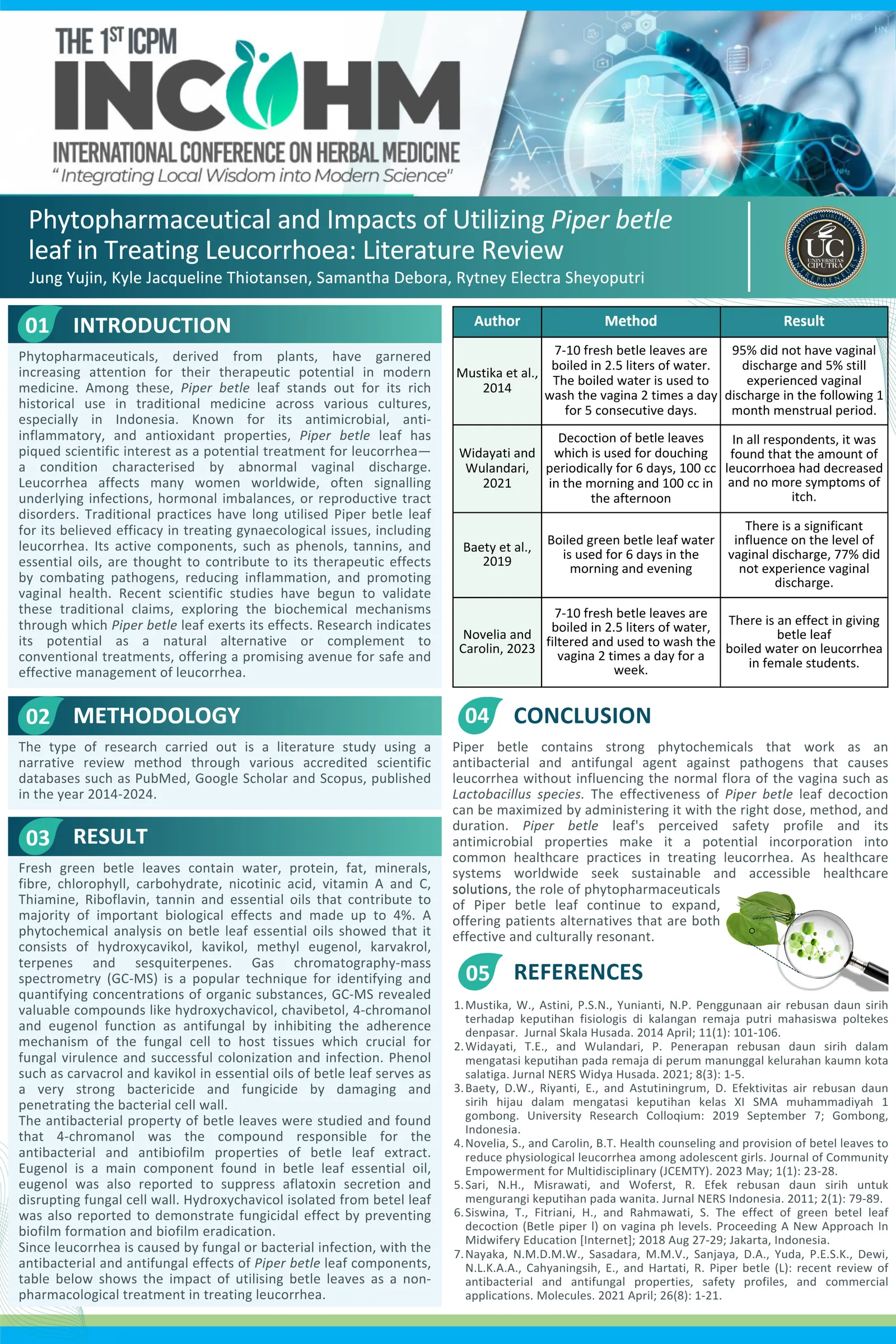 Pharmacology & TherapeuticsPhytopharmaceutical and Impacts of Utilizing Piper betle leaf in Treating Leucorrhoea: Literature ReviewY. Jung, K. Thiotansen, S. Debora and 1 other
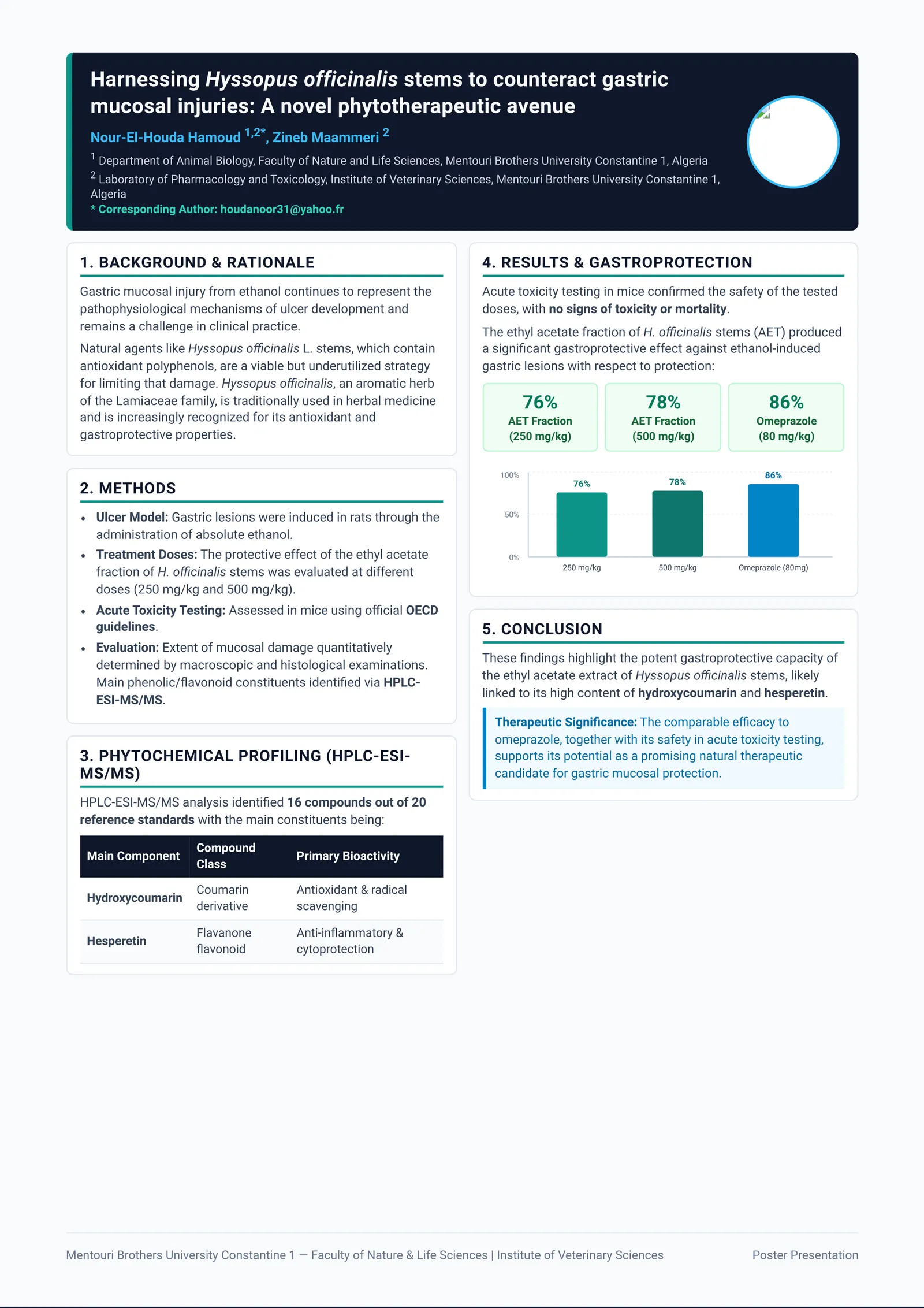 Pharmacology & TherapeuticsHarnessing Hyssopus officinalis stems to counteract gastric mucosal injuries: A novel phytotherapeutic avenueN. Hamoud, Z. Maammeri