
Care pathway of patients consulting at the pediatric emergency department of the Cayenne Hospital Center during the Covid-19 epidemic
English version of a poster presented in French.
Flore Deboscker1✉, J Bahri1, R Muticy1, J M Pujo1, K Ben Ameur1
- 1 Service d’Accueil des Urgences, centre Hospitalier de Cayenne, Guyane Française
Received 7 October 2026 · Accepted 7 October 2026 · Published 7 October 2026
DOI: https://doi.org/10.5281/zenodo.23219638
Article PDF · Original poster (PDF)
- views
- 13
- downloads
- 12
- countries
- 9
Since publication · journal site and Zenodo archive · robots excluded
Abstract
Introduction
In France, the attendance of emergency services, especially pediatric emergencies, is constantly increasing, negatively impacting the quality of care. In French Guiana, medical desertification complicates the care pathway, worsened in 2020 by the Covid-19 pandemic, causing confusion for patients and healthcare professionals. The study aims to describe the care pathway of children consulting at the pediatric emergency department to identify causes of non-compliance and propose adapted solutions.
Materials and methods
Prospective descriptive monocentric study including children from 1 day to 15 years and 3 months consulting at the pediatric emergency department between 8 a.m. and 1 a.m. over two weeks in July 2020. Trauma and vital emergencies, as well as recalled patients, were excluded. Data collected via questionnaire completed by a physician after parental consent.
Results
68 questionnaires completed. Mean age 4.5 years, 43% under 2 years, sex ratio 0.88. Mothers' nationality: 38.5% French, 34% Haitian, 15.3% Brazilian. 15% without social coverage. 50% single-parent families, 33% without declared primary care physician. 70% consultations between 8 a.m. and 6 p.m., 78% spontaneous without prior call. 22% consulted a doctor before, 45% judged the visit too serious, 20% primary care physician unavailable. Fever main reason (36%). 50% consultations judged unjustified. 6 hospitalizations, 34 returned home without follow-up.
Conclusion
The study highlights major socio-economic difficulties (lack of social protection, primary care physician, limited support) and poor parental assessment of emergencies, leading to an inadequate care pathway. Underuse of primary ambulatory care is noted due to inaccessibility. Proposals include information on care structures, parental education on severity and fever, and measures to facilitate access to ambulatory care.
Original poster
Related posters
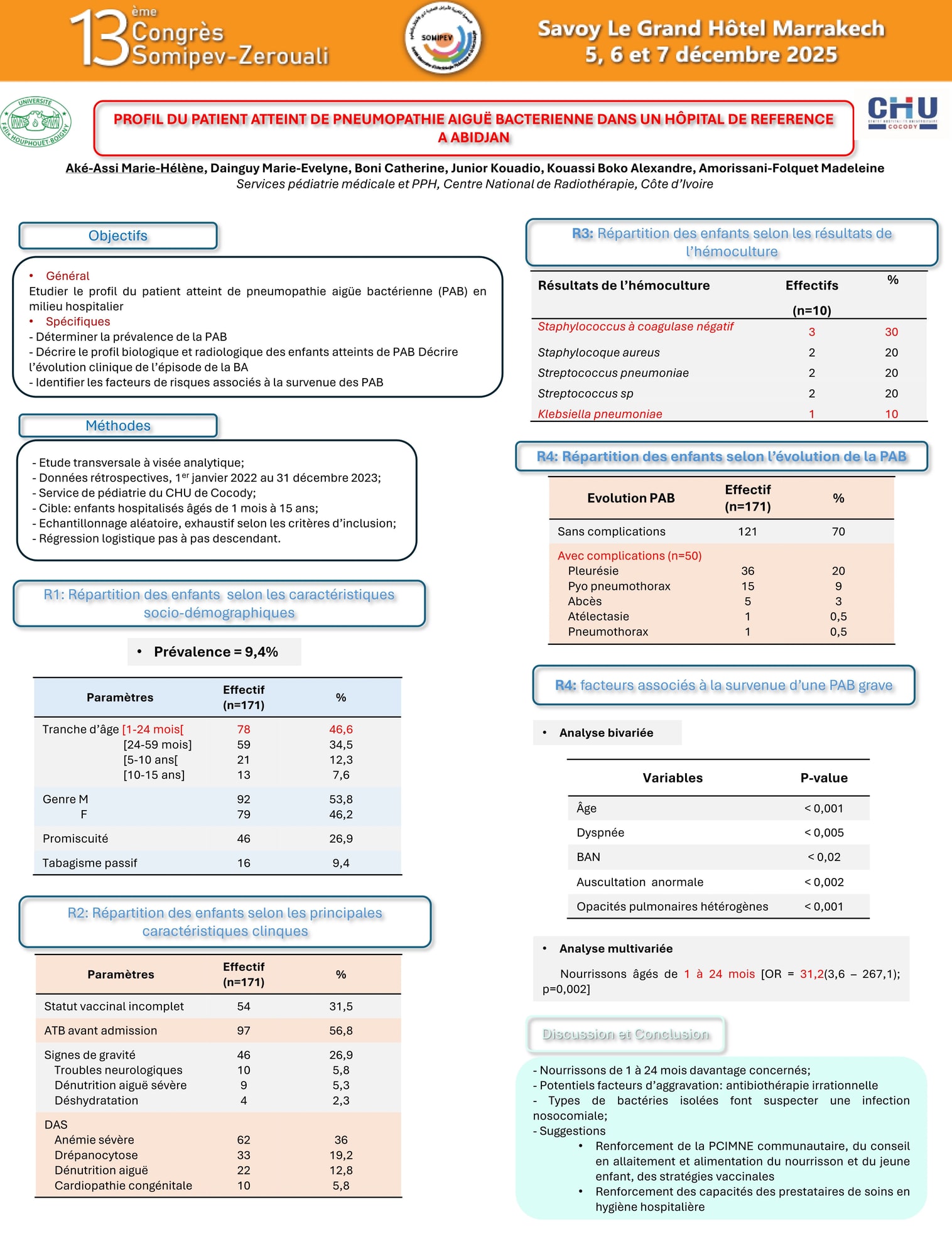 PediatricsProfile of patients with acute bacterial pneumonia in a reference hospital in AbidjanM. Aké-Assi, M. Dainguy, C. Boni and 3 others
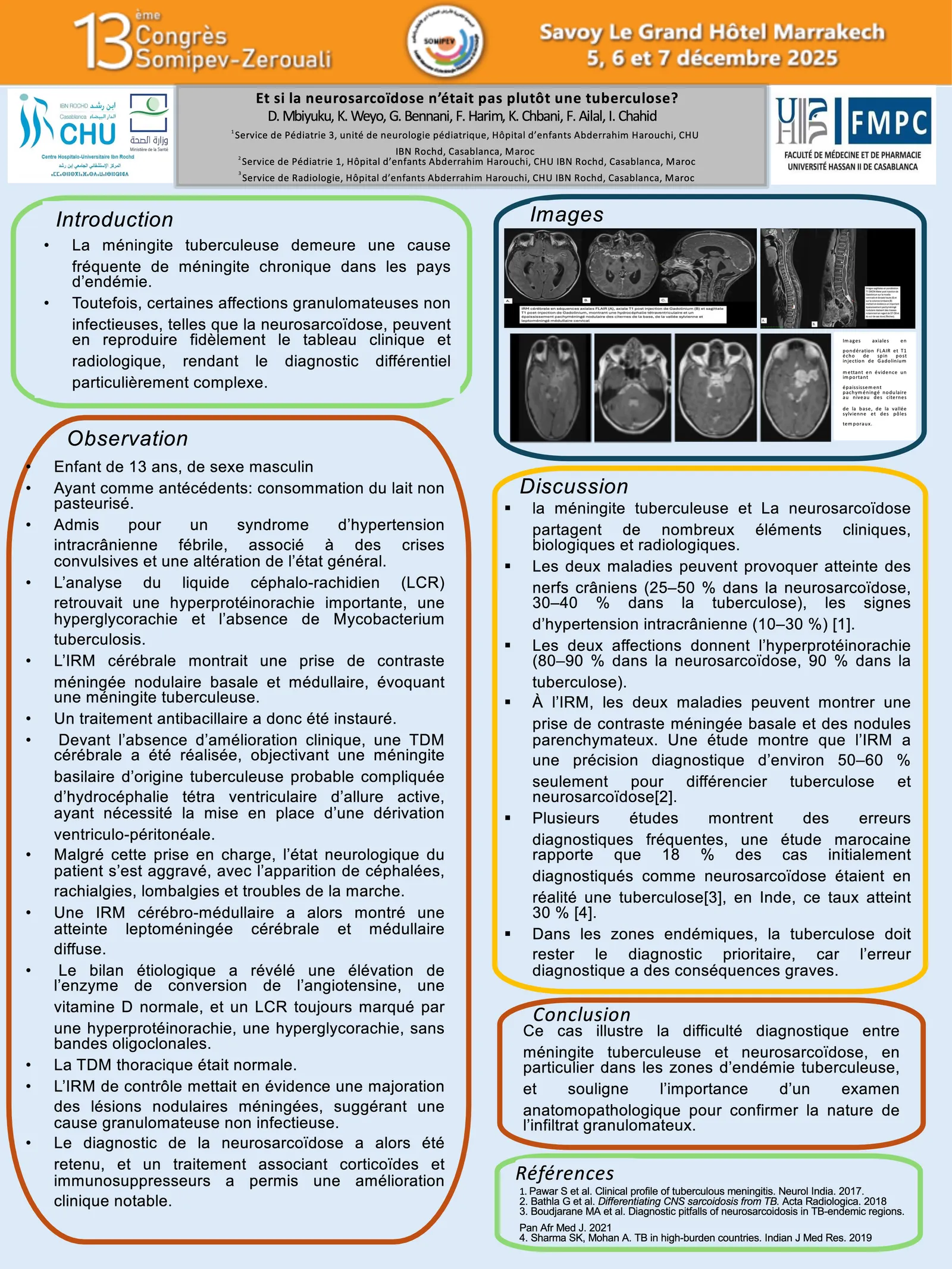 PediatricsWhat if neurosarcoidosis was actually tuberculosis?D. Mbiyuku, K. Weyo, G. Bennani and 4 others
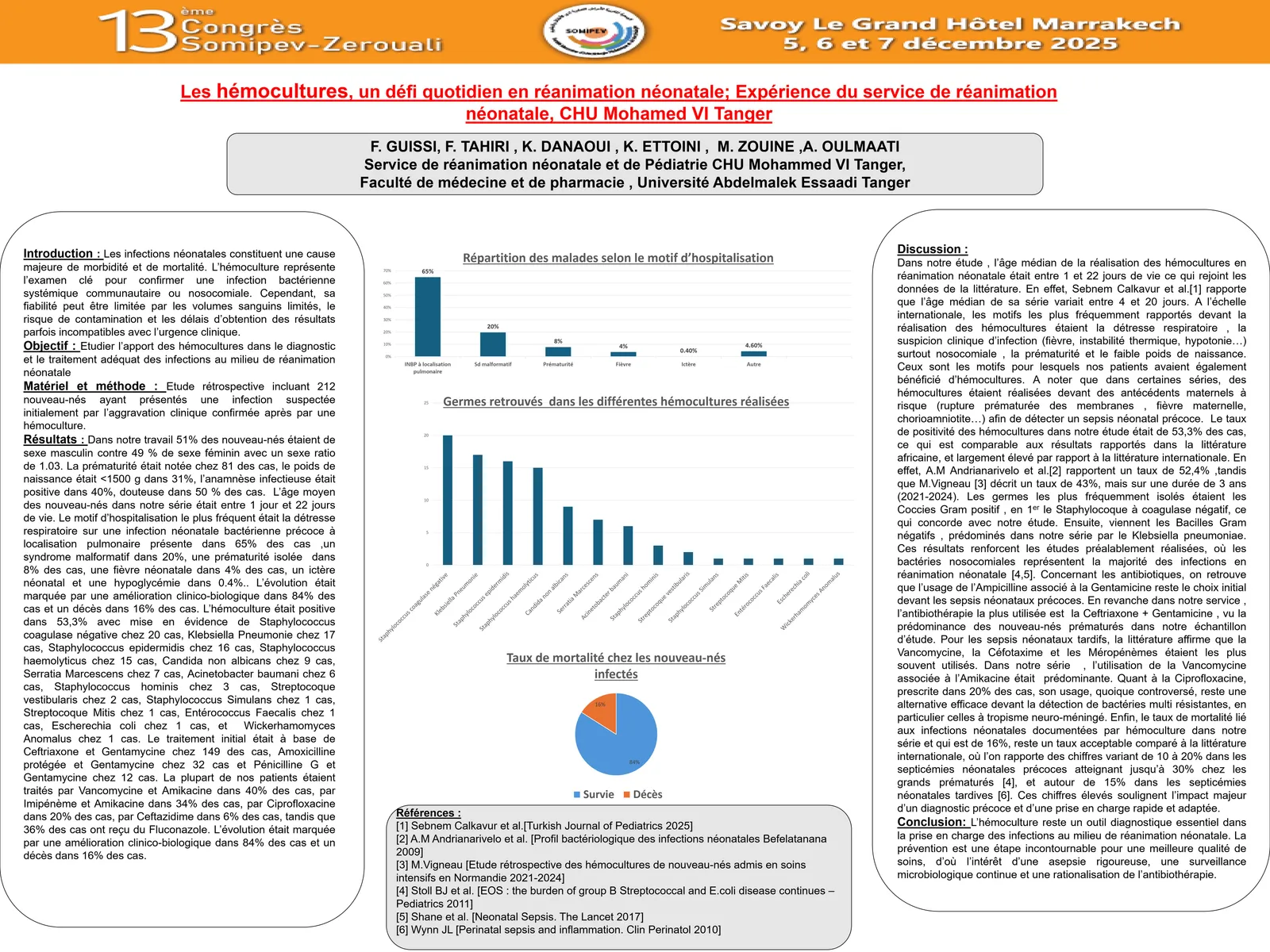 PediatricsBlood cultures, a daily challenge in neonatal intensive care; Experience of the neonatal intensive care unit, CHU Mohamed VI TangerF. Guissi, F. Tahiri, K. Danaoui and 3 others
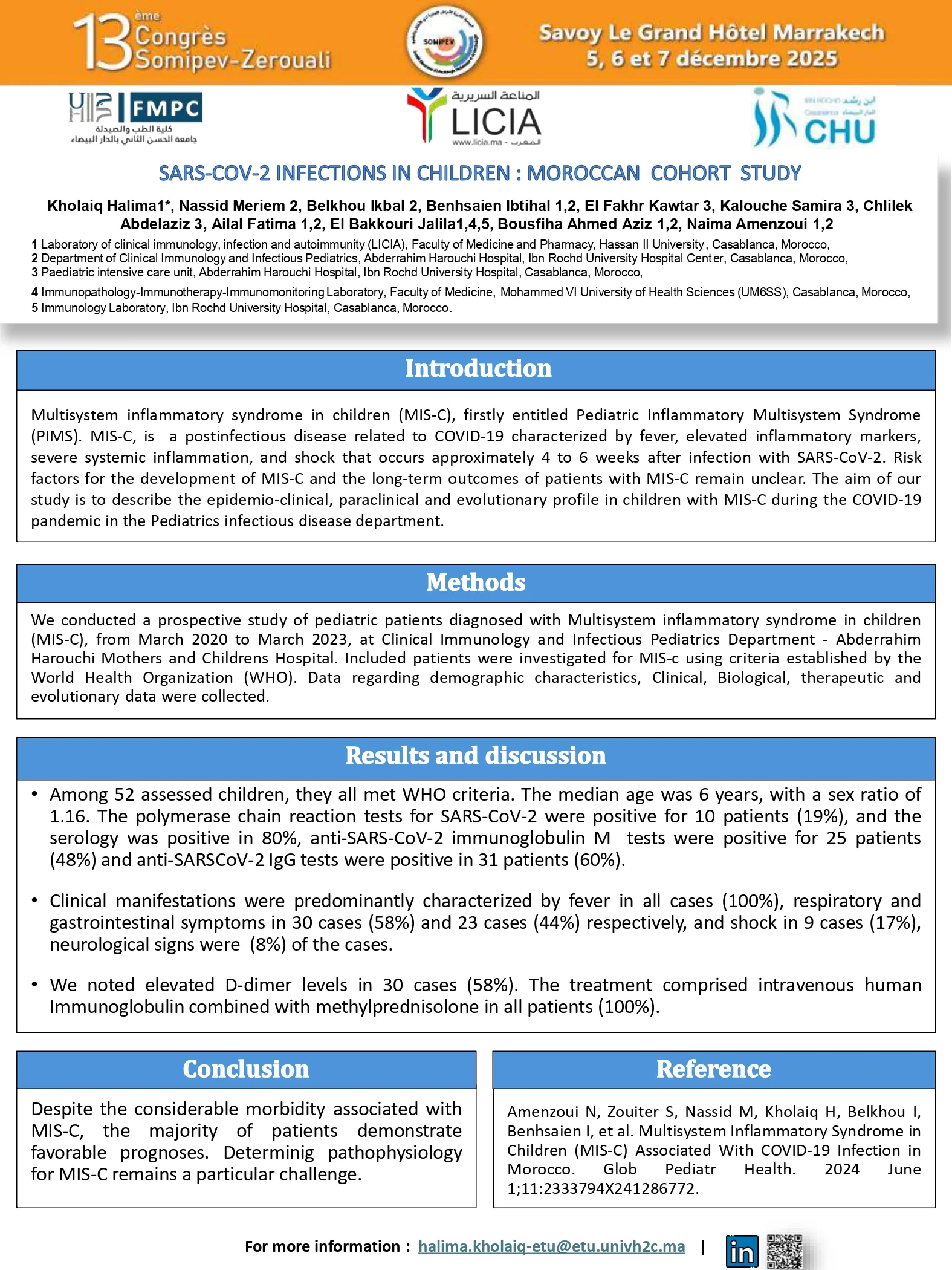 PediatricsSARS-COV-2 infections in children : Moroccan cohort studyK. Halima, N. Meriem, B. Ikbal and 8 others
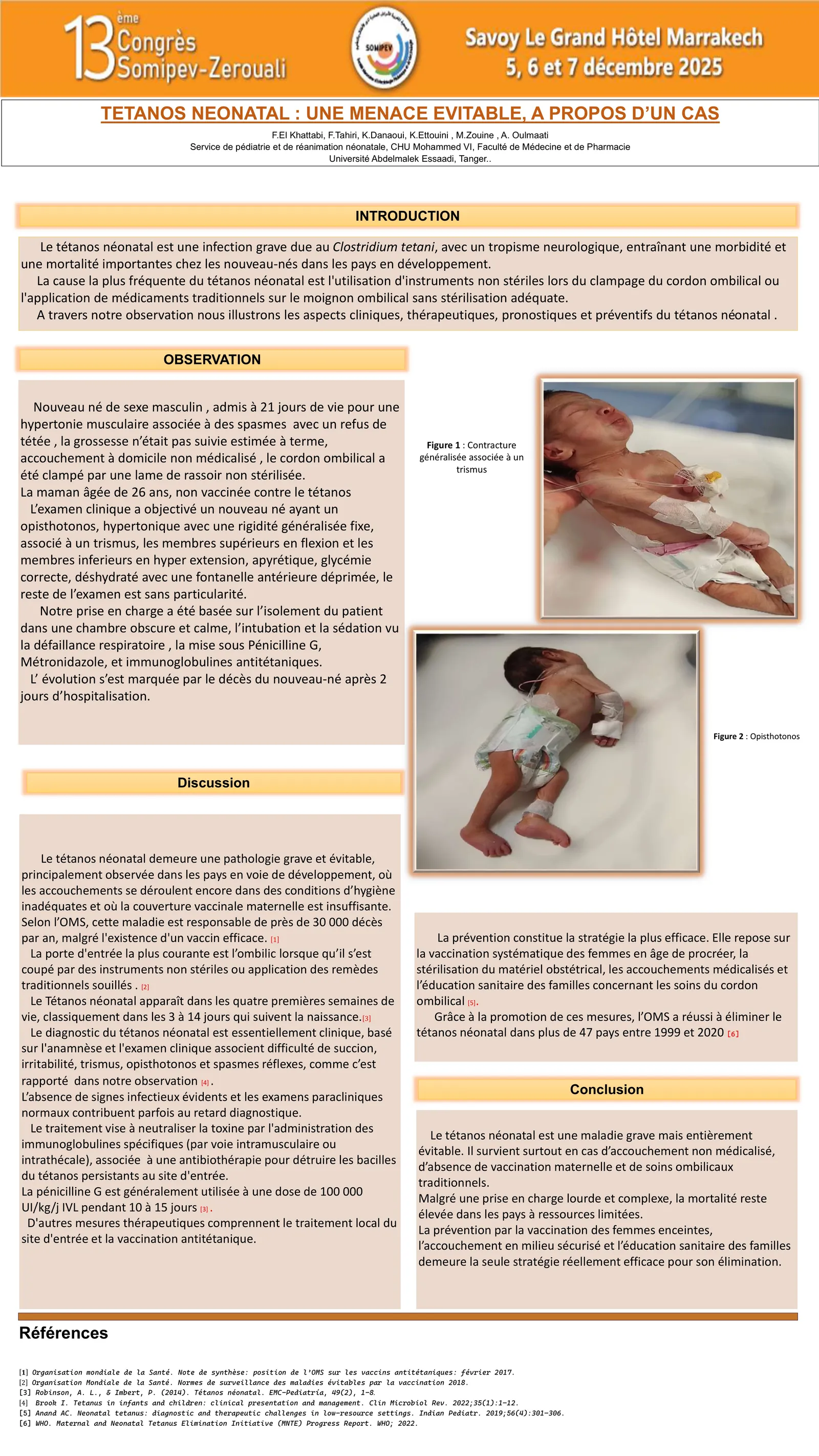 PediatricsNeonatal tetanus: a preventable threat, about a caseF. El Khattabi, F. Tahiri, K. Danaoui and 3 others
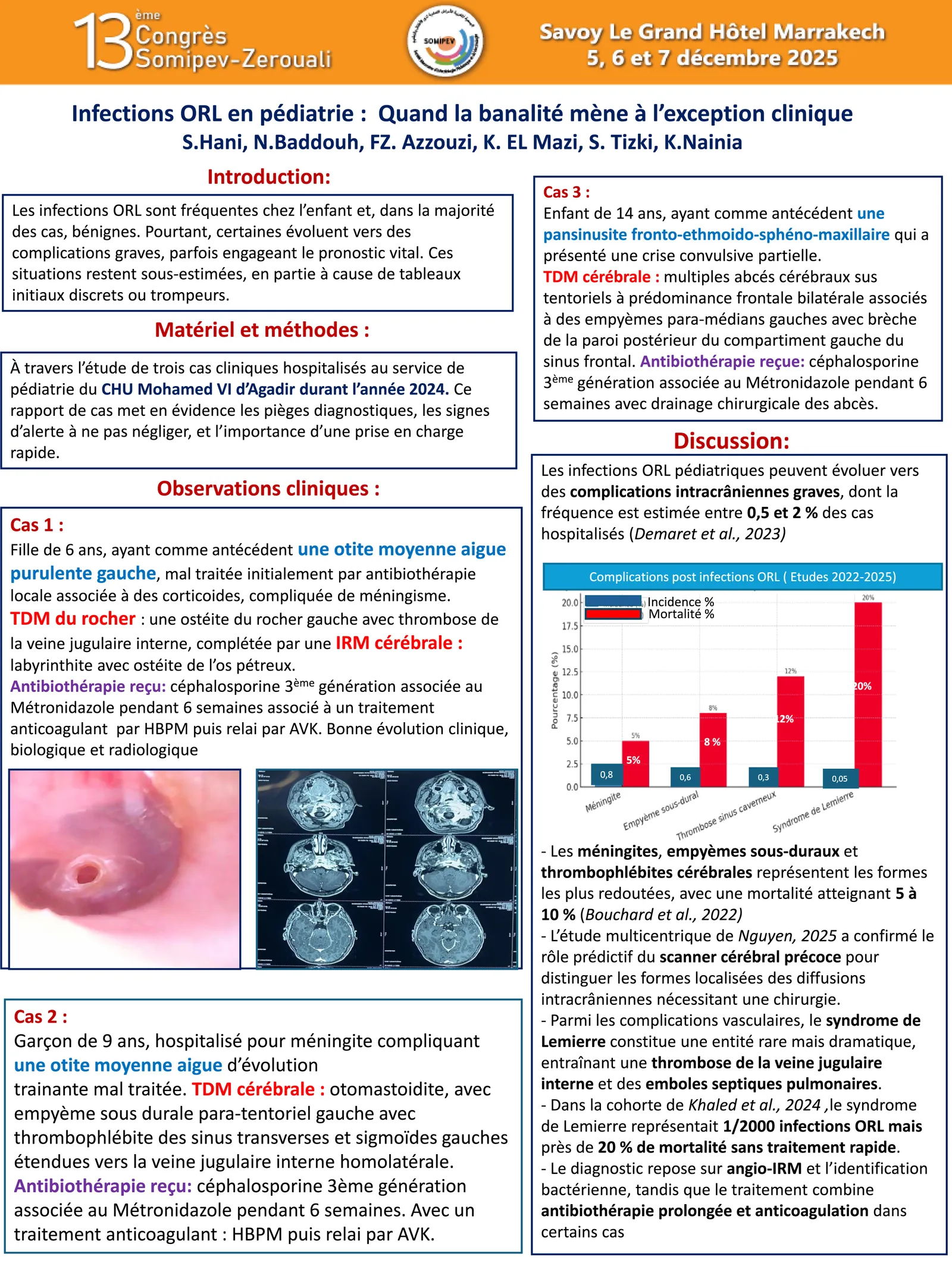 PediatricsENT infections in pediatrics: When common conditions lead to clinical exceptionsS. Hani, N. Baddouh, F. Azzouzi and 3 others