
SARS-COV-2 infections in children : Moroccan cohort study
SARS-COV-2 infections in children: Moroccan cohort study
Kholaiq Halima1✉, Nassid Meriem2, Belkhou Ikbal2, Benhsaien Ibtihal1,2, El Fakhr Kawtar3, Kalouche Samira3, Chlilek Abdelaziz3, Ailal Fatima1,2, El Bakkouri Jalila1,2,4,5, Bousfiha Ahmed Aziz1,2, Naima Amenzoui1,2
- 1 Laboratory of clinical immunology, infection and autoimmunity (LICIA), Faculty of Medicine and Pharmacy, Hassan II University , Casablanca, Morocco
- 2 Department of Clinical Immunology and Infectious Pediatrics, Abderrahim Harouchi Hospital, Ibn Rochd University Hospital Center, Casablanca, Morocco
- 3 Paediatric intensive care unit, Abderrahim Harouchi Hospital, Ibn Rochd University Hospital, Casablanca, Morocco
- 4 Immunopathology-Immunotherapy-Immunomonitoring Laboratory, Faculty of Medicine, Mohammed VI University of Health Sciences (UM6SS), Casablanca, Morocco
- 5 Immunology Laboratory, Ibn Rochd University Hospital, Casablanca, Morocco
Received 7 October 2026 · Accepted 7 October 2026 · Published 7 October 2026
DOI: https://doi.org/10.5281/zenodo.23219624
- views
- 22
- downloads
- 16
- countries
- 12
Since publication · journal site and Zenodo archive · robots excluded
Abstract
Introduction
Multisystem inflammatory syndrome in children (MIS-C), initially called Pediatric Inflammatory Multisystem Syndrome (PIMS), is a postinfectious disease related to COVID-19 characterized by fever, elevated inflammatory markers, severe systemic inflammation, and shock occurring about 4 to 6 weeks after SARS-CoV-2 infection. The risk factors for MIS-C development and long-term outcomes remain unclear. This study aims to describe the epidemiological, clinical, paraclinical, and evolutionary profile of children with MIS-C during the COVID-19 pandemic in the Pediatrics infectious disease department.
Materials and methods
A prospective study was conducted on pediatric patients diagnosed with MIS-C from March 2020 to March 2023 at the Clinical Immunology and Infectious Pediatrics Department, Abderrahim Harouchi Mothers and Children's Hospital. Patients were investigated for MIS-C using WHO criteria. Data on demographics, clinical, biological, therapeutic, and evolutionary aspects were collected.
Results
Among 52 children meeting WHO criteria, the median age was 6 years with a sex ratio of 1.16. SARS-CoV-2 PCR was positive in 19% of patients, serology positive in 80%, anti-SARS-CoV-2 IgM positive in 48%, and IgG positive in 60%. Clinical manifestations included fever in all cases, respiratory and gastrointestinal symptoms in 58% and 44% respectively, shock in 17%, and neurological signs in 8%. Elevated D-dimer levels were noted in 58%. Treatment consisted of intravenous human immunoglobulin combined with methylprednisolone in all patients.
Conclusion
Despite significant morbidity associated with MIS-C, most patients have favorable outcomes. Determining the pathophysiology of MIS-C remains a particular challenge.
Original poster
References
- Amenzoui N, Zouiter S, Nassid M, Kholaiq H, Belkhou I, Benhsaien I, et al. Multisystem Inflammatory Syndrome in Children (MIS-C) Associated With COVID-19 Infection in Morocco. Glob Pediatr Health. 2024 June 1;11:2333794X241286772.
Related posters
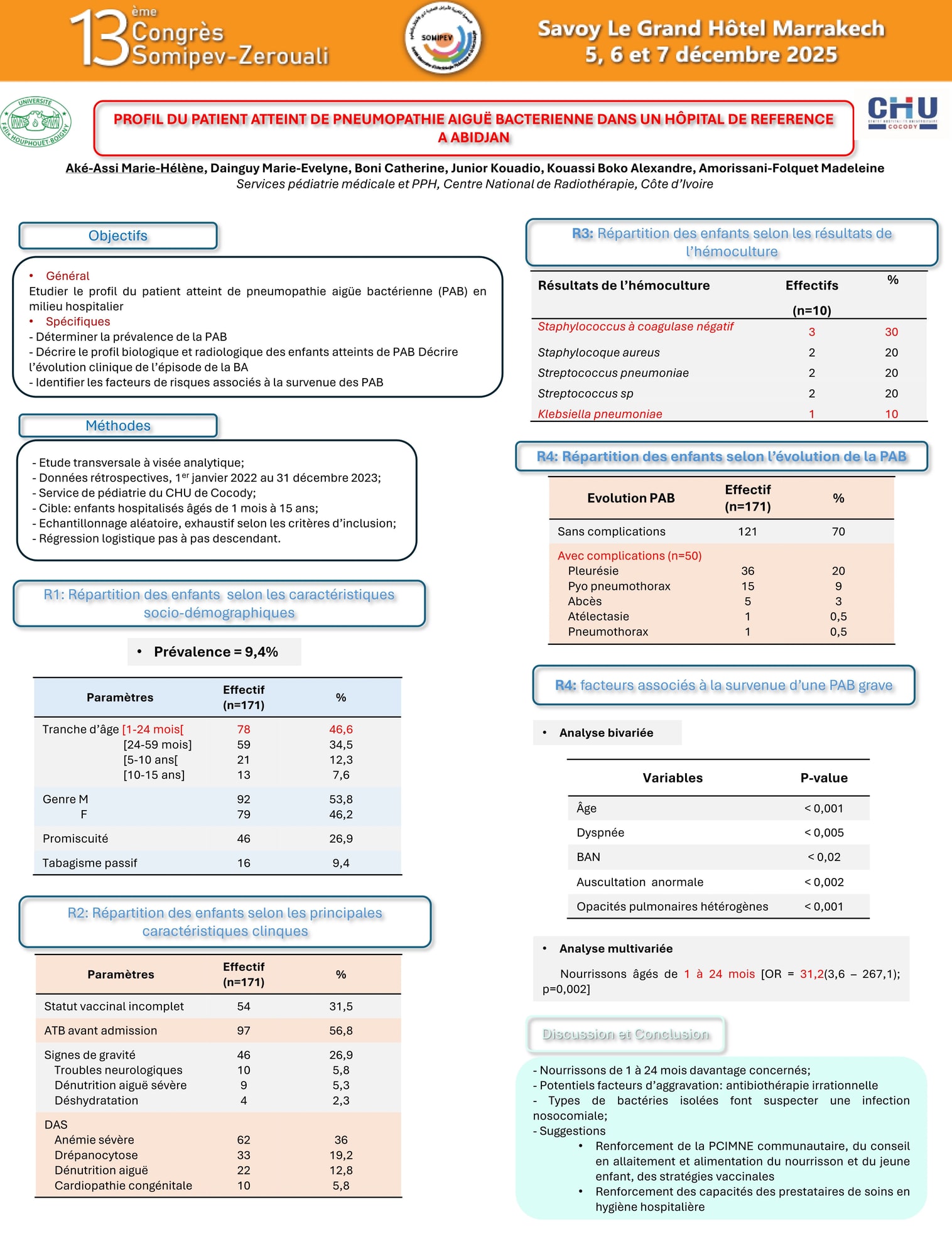 PediatricsProfile of patients with acute bacterial pneumonia in a reference hospital in AbidjanM. Aké-Assi, M. Dainguy, C. Boni and 3 others
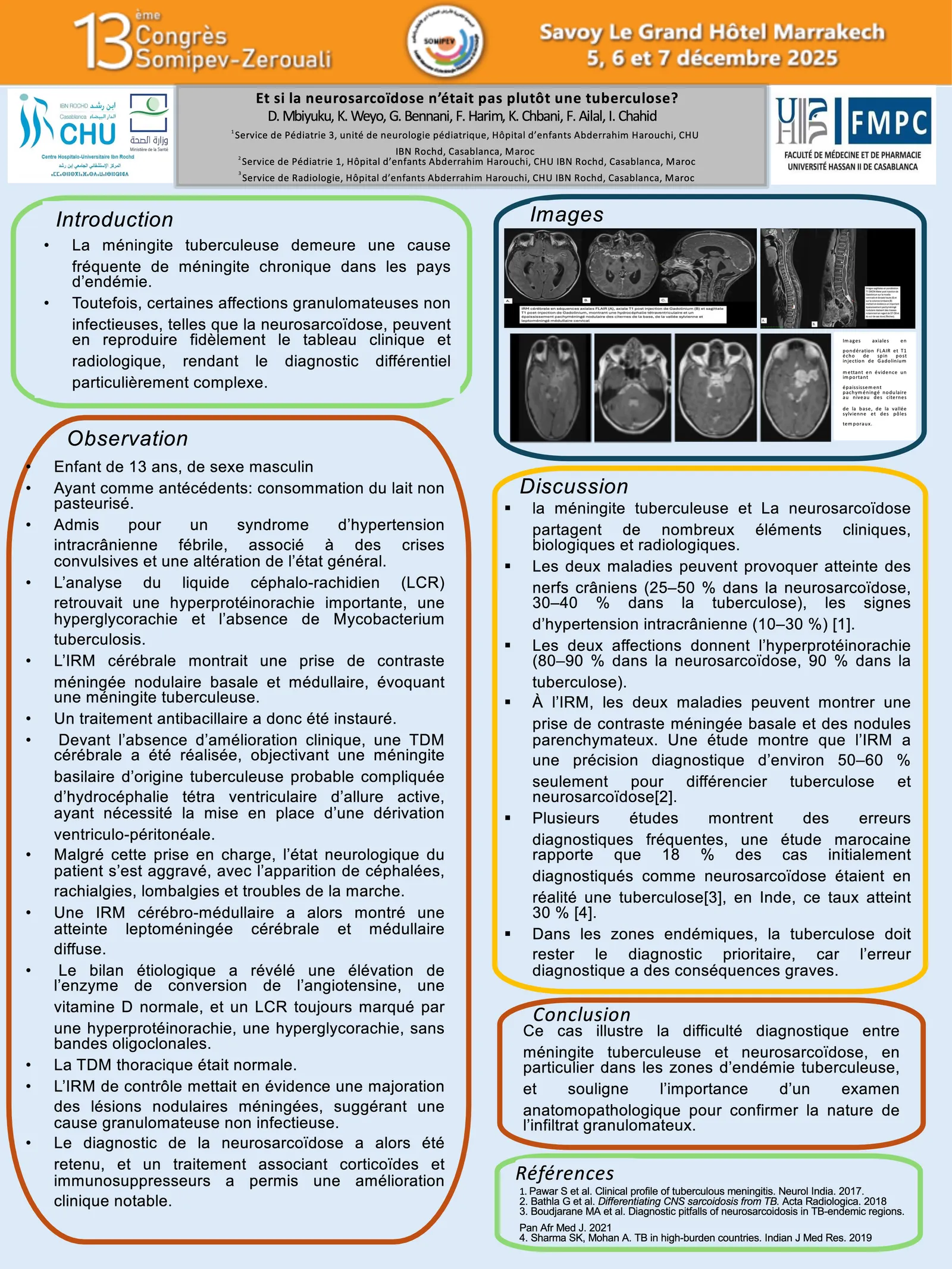 PediatricsWhat if neurosarcoidosis was actually tuberculosis?D. Mbiyuku, K. Weyo, G. Bennani and 4 others
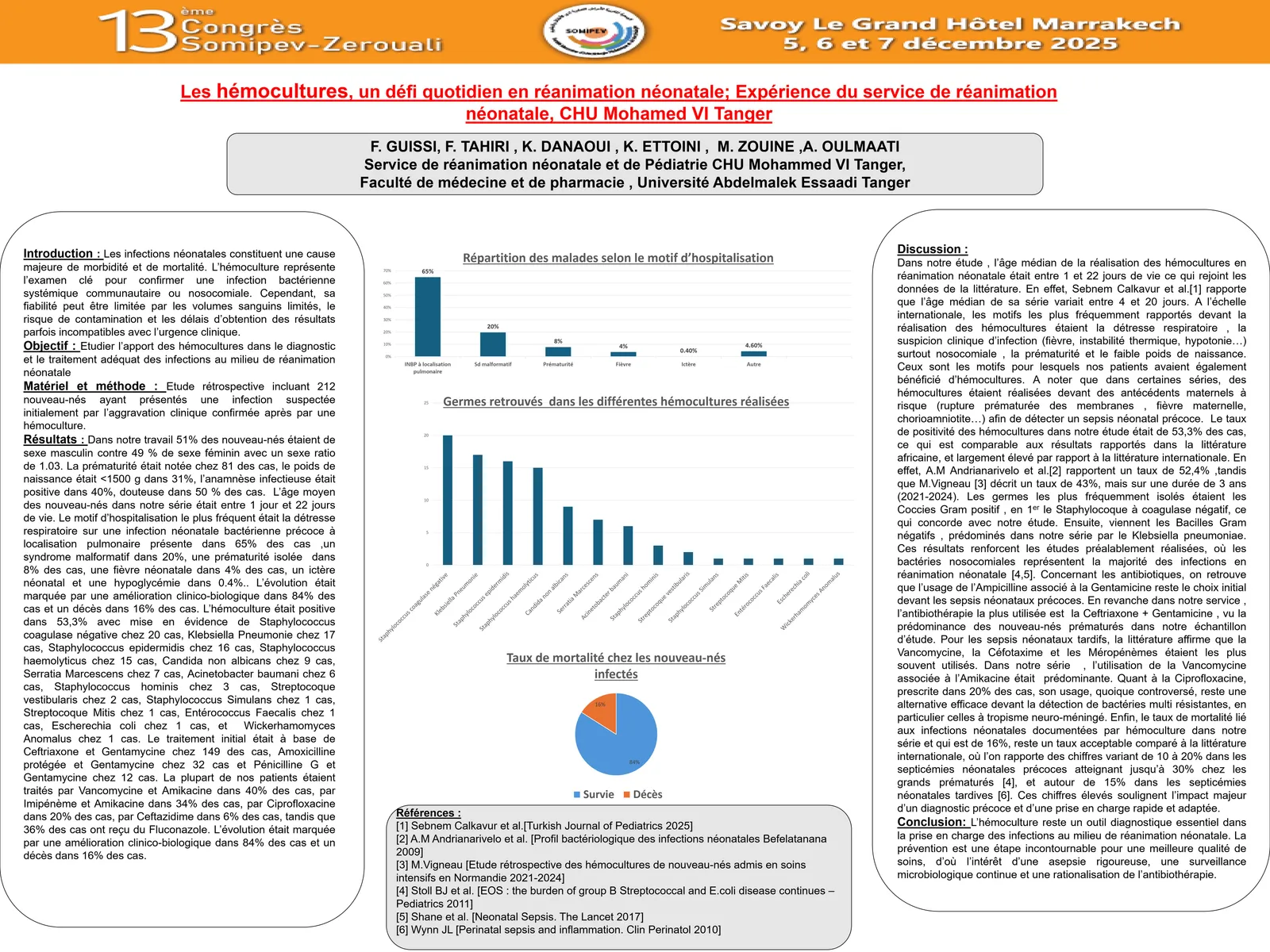 PediatricsBlood cultures, a daily challenge in neonatal intensive care; Experience of the neonatal intensive care unit, CHU Mohamed VI TangerF. Guissi, F. Tahiri, K. Danaoui and 3 others
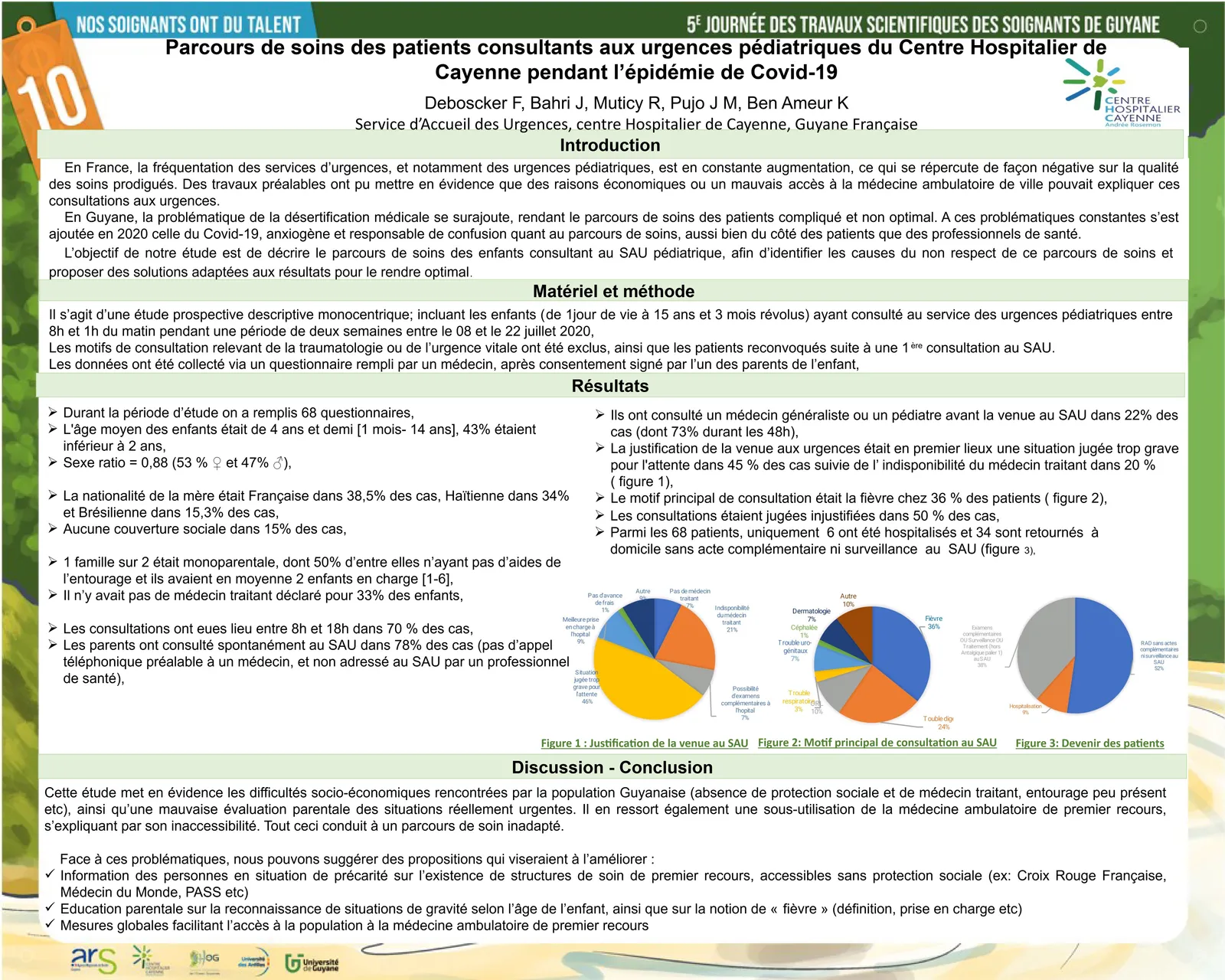 PediatricsCare pathway of patients consulting at the pediatric emergency department of the Cayenne Hospital Center during the Covid-19 epidemicF. Deboscker, J. Bahri, R. Muticy and 2 others
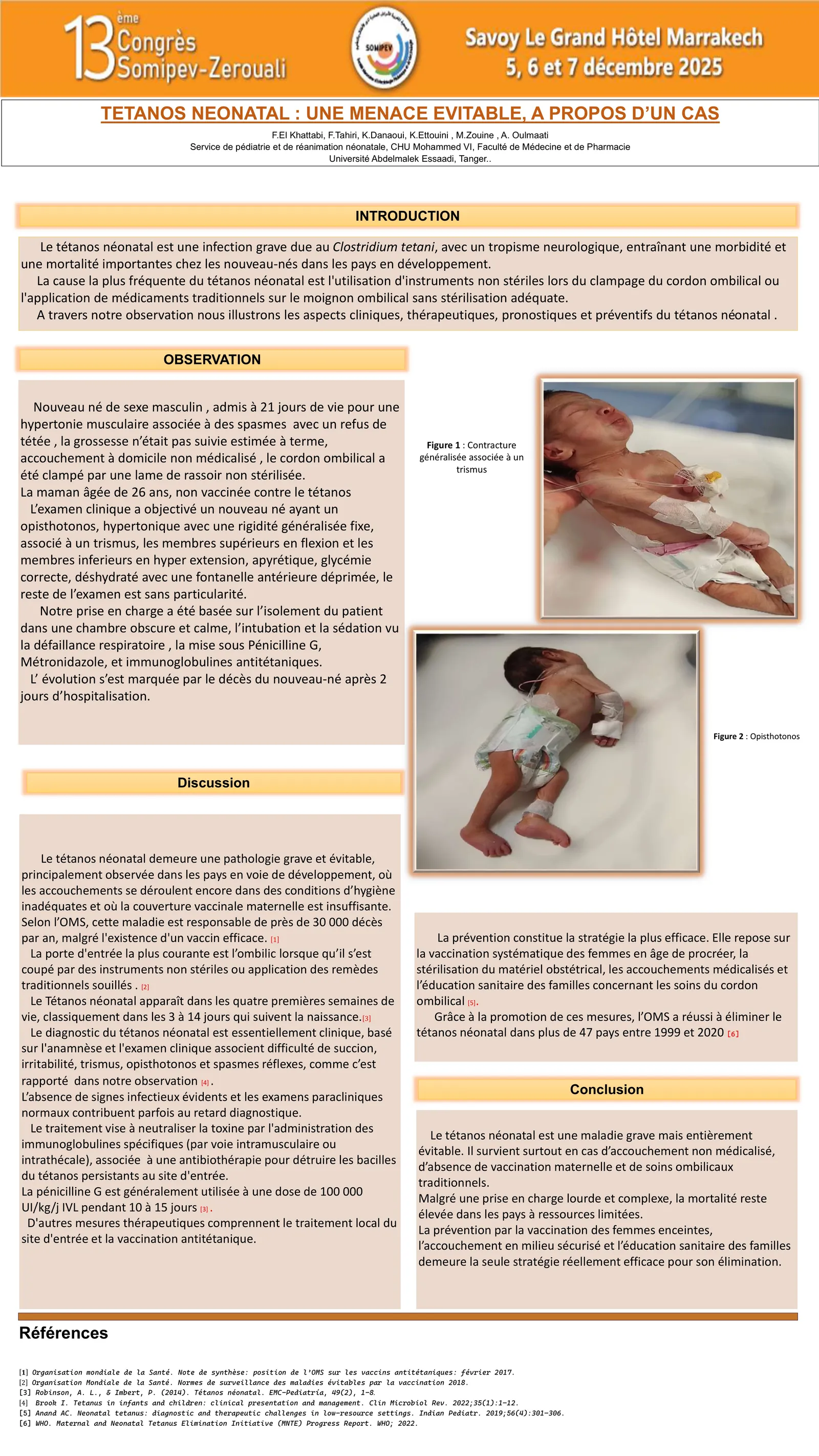 PediatricsNeonatal tetanus: a preventable threat, about a caseF. El Khattabi, F. Tahiri, K. Danaoui and 3 others
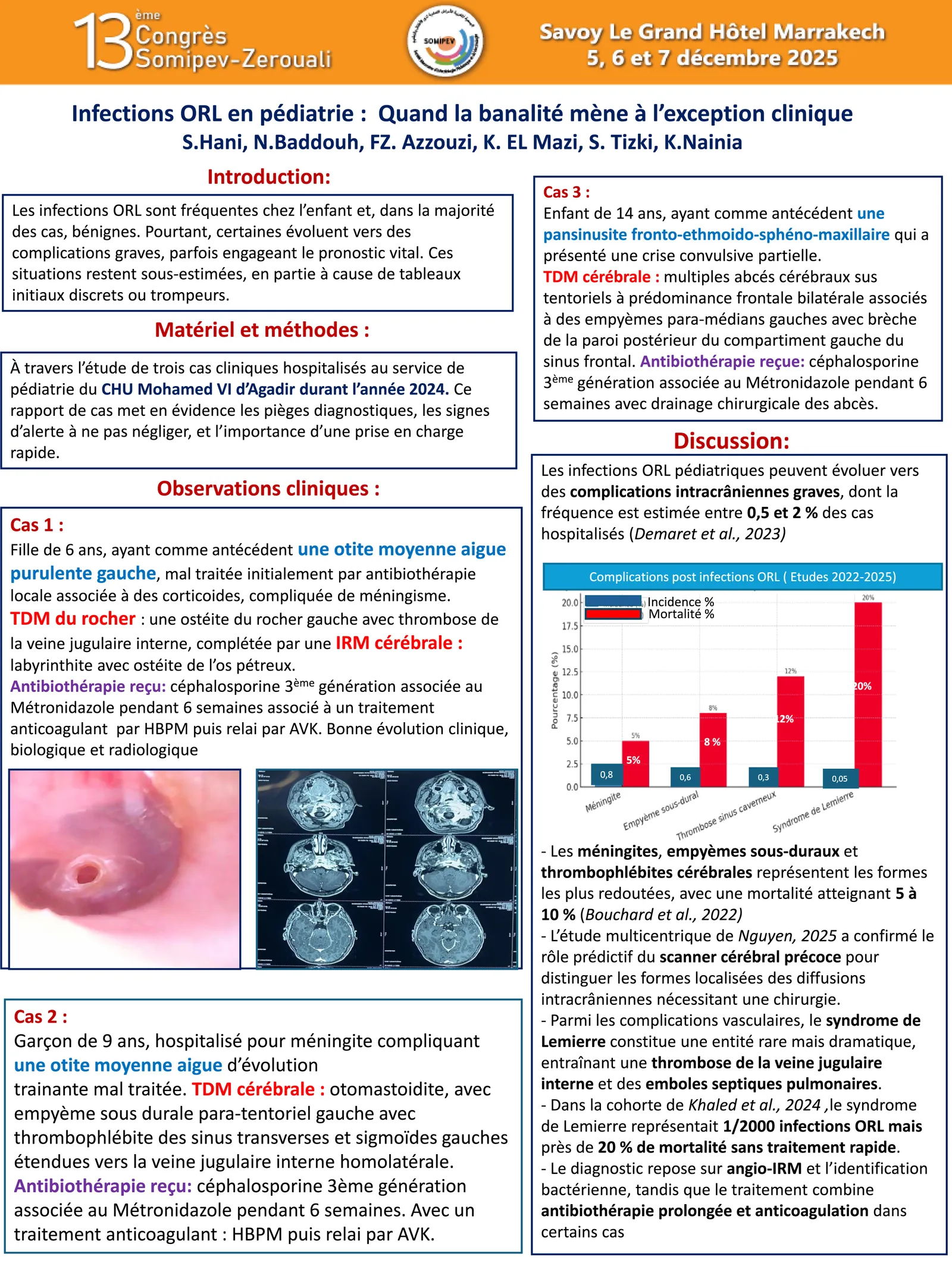 PediatricsENT infections in pediatrics: When common conditions lead to clinical exceptionsS. Hani, N. Baddouh, F. Azzouzi and 3 others