
Profile of patients with acute bacterial pneumonia in a reference hospital in Abidjan
English version of a poster presented in French.
Marie-Hélène Aké-Assi1✉, Marie-Evelyne Dainguy1, Catherine Boni1, Junior Kouadio1, Boko Alexandre Kouassi1, Madeleine Amorissani-Folquet1
- 1 Services pédiatrie médicale et PPH, Centre National de Radiothérapie, Côte d’Ivoire
Received 6 October 2026 · Accepted 9 October 2026 · Published 9 October 2026
DOI: https://doi.org/10.5281/zenodo.23349272
Article PDF · Original poster (PDF)
- views
- 15
- downloads
- 12
- countries
- 6
Since publication · journal site and Zenodo archive · robots excluded
Abstract
Introduction
This study aims to analyze the profile of patients with acute bacterial pneumonia (ABP) in a hospital setting by determining prevalence, describing biological and radiological profiles of affected children, and identifying risk factors associated with ABP occurrence.
Materials and methods
This is a cross-sectional analytical retrospective study conducted from January 1, 2022, to December 31, 2023, in the pediatric department of CHU Cocody. The target population was hospitalized children aged 1 month to 15 years. Sampling was random and exhaustive according to inclusion criteria. Stepwise descending logistic regression was used.
Results
The prevalence of ABP was 9.4%. Most children were aged 1 to 24 months. Common clinical features included incomplete vaccination status and prior antibiotic therapy. Isolated bacteria included coagulase-negative Staphylococcus, Staphylococcus aureus, Streptococcus pneumoniae, Streptococcus sp, and Klebsiella pneumoniae. Evolution was without complications in 70% of cases, with complications such as pleurisy, pyopneumothorax, abscess, atelectasis, and pneumothorax. Factors associated with severe ABP were age, dyspnea, neonatal acute bronchitis, abnormal auscultation, and heterogeneous pulmonary opacities. Infants aged 1 to 24 months were particularly at risk.
Conclusion
Infants aged 1 to 24 months are more affected by ABP. Aggravating factors include irrational antibiotic therapy. The types of isolated bacteria suggest nosocomial infection. Recommendations include strengthening community prevention, breastfeeding and nutrition counseling, vaccination strategies, and healthcare providers' capacity in hospital hygiene.
Original poster
Related posters
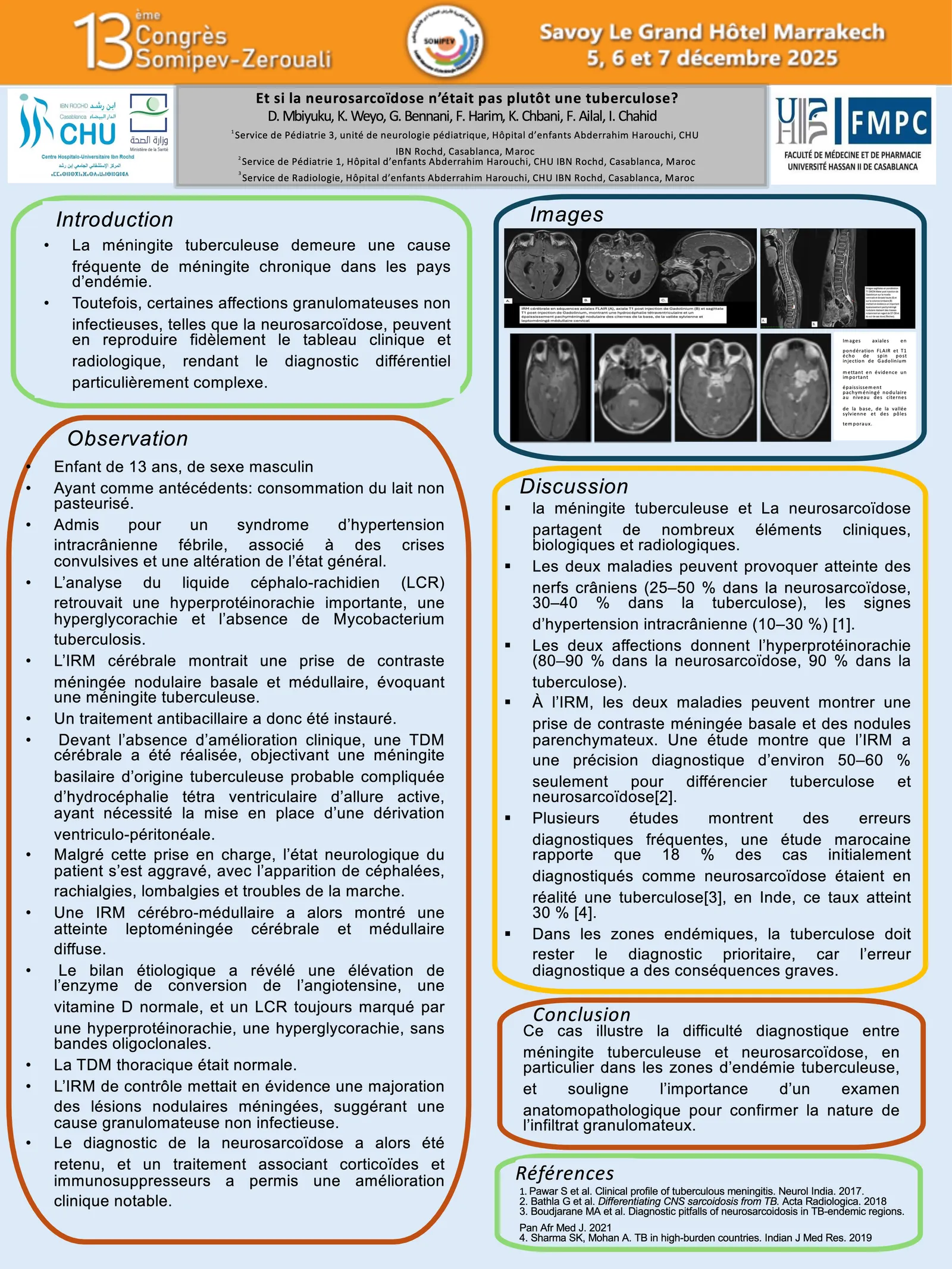 PediatricsWhat if neurosarcoidosis was actually tuberculosis?D. Mbiyuku, K. Weyo, G. Bennani and 4 others
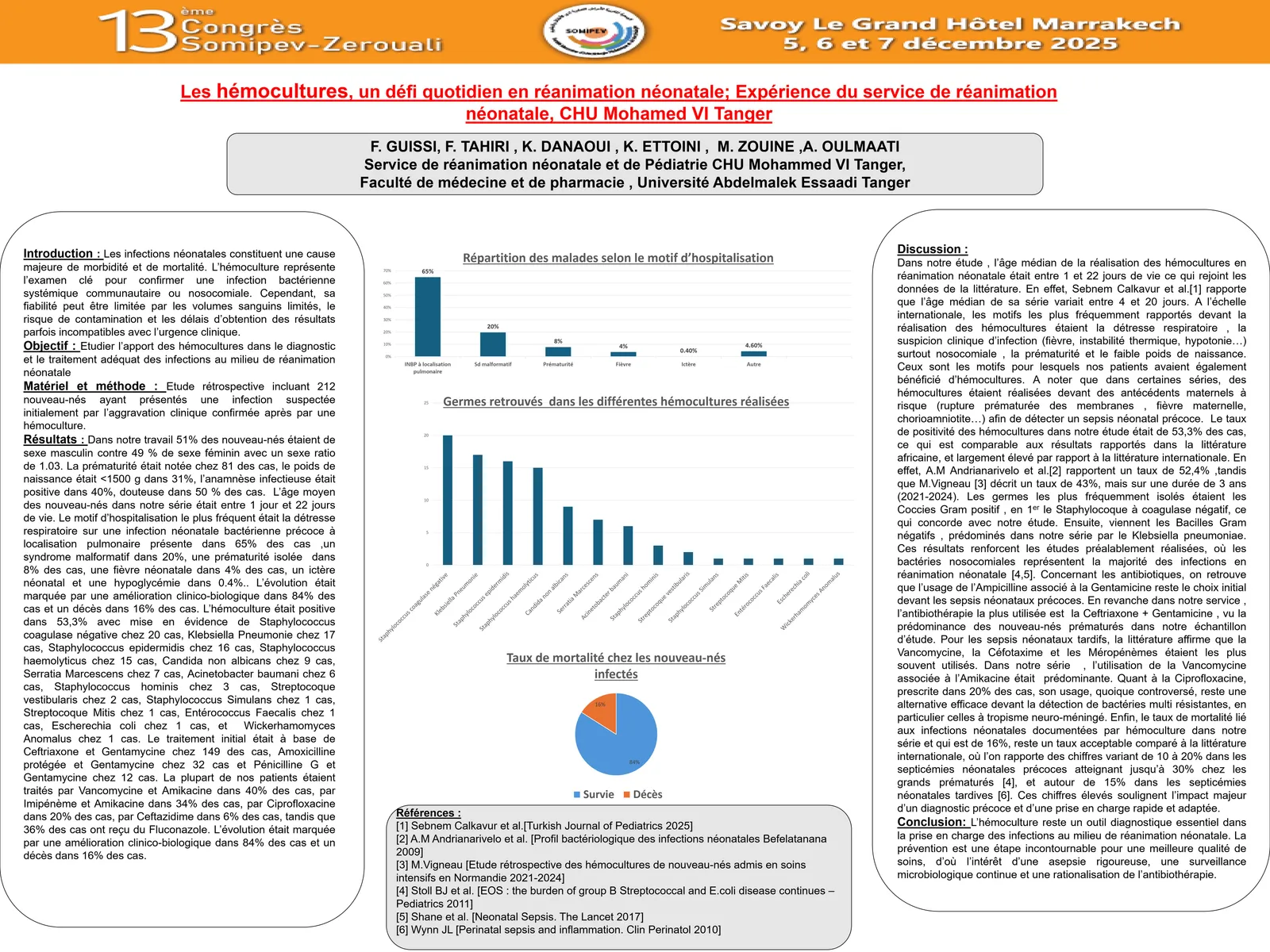 PediatricsBlood cultures, a daily challenge in neonatal intensive care; Experience of the neonatal intensive care unit, CHU Mohamed VI TangerF. Guissi, F. Tahiri, K. Danaoui and 3 others
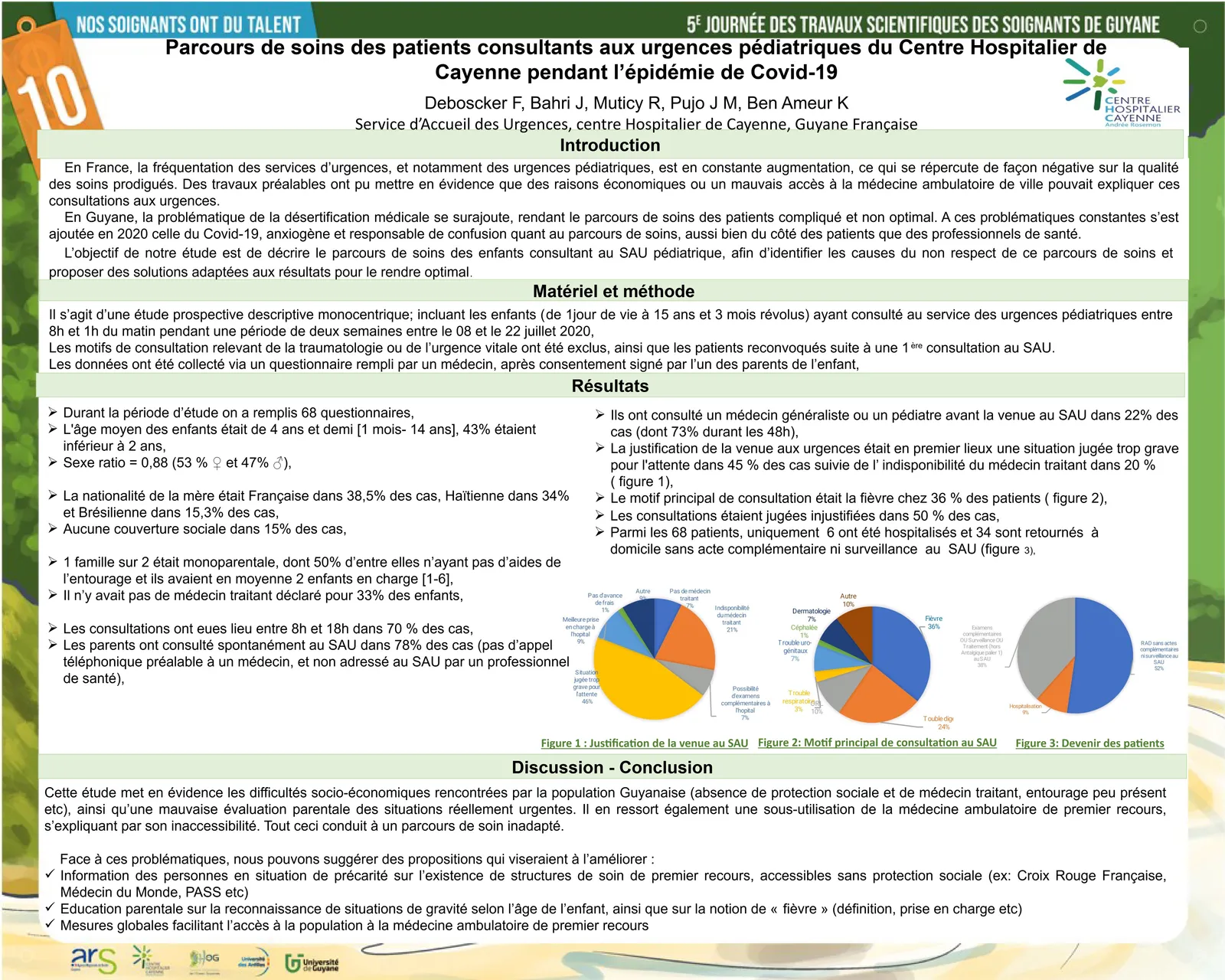 PediatricsCare pathway of patients consulting at the pediatric emergency department of the Cayenne Hospital Center during the Covid-19 epidemicF. Deboscker, J. Bahri, R. Muticy and 2 others
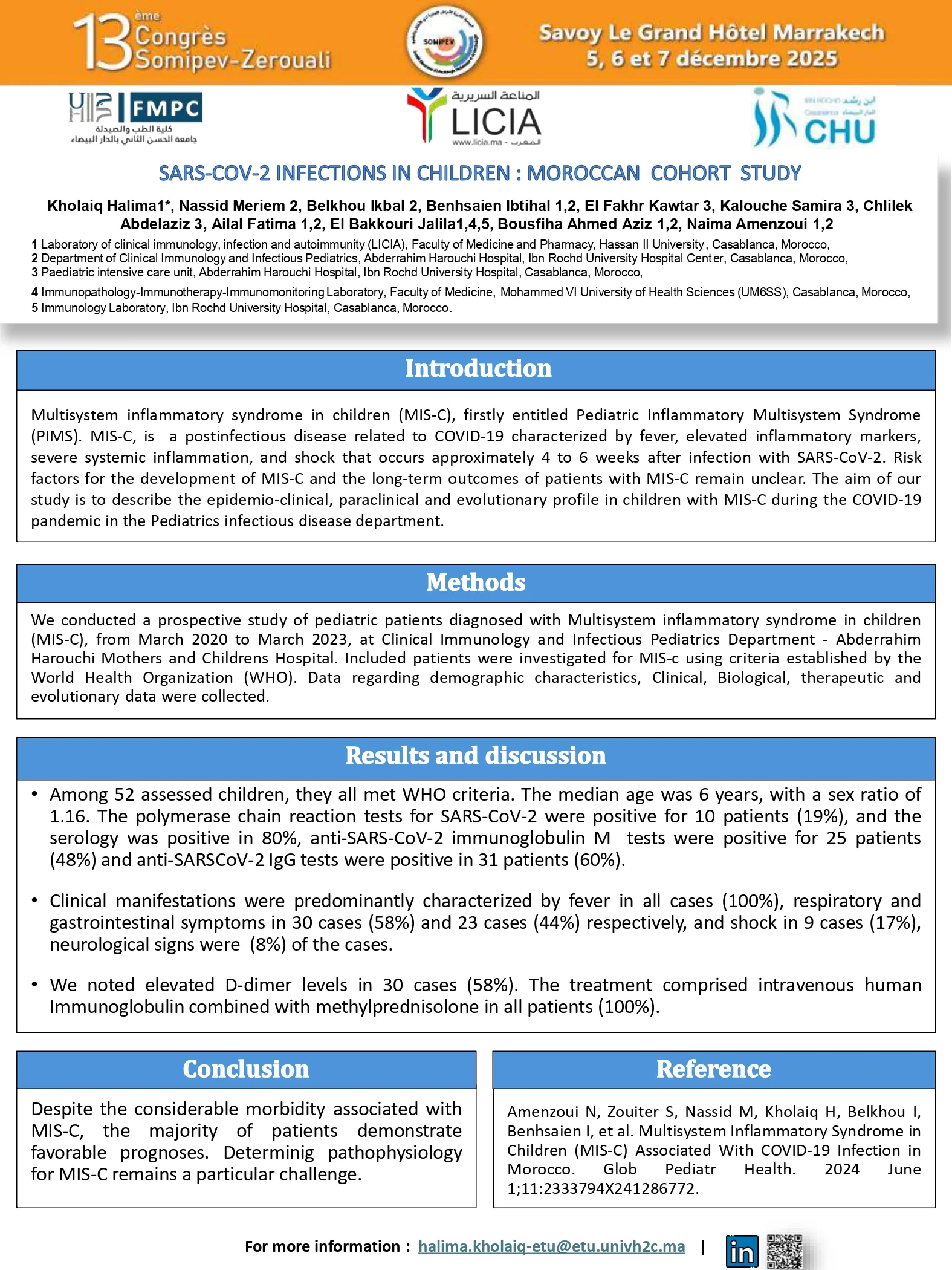 PediatricsSARS-COV-2 infections in children : Moroccan cohort studyK. Halima, N. Meriem, B. Ikbal and 8 others
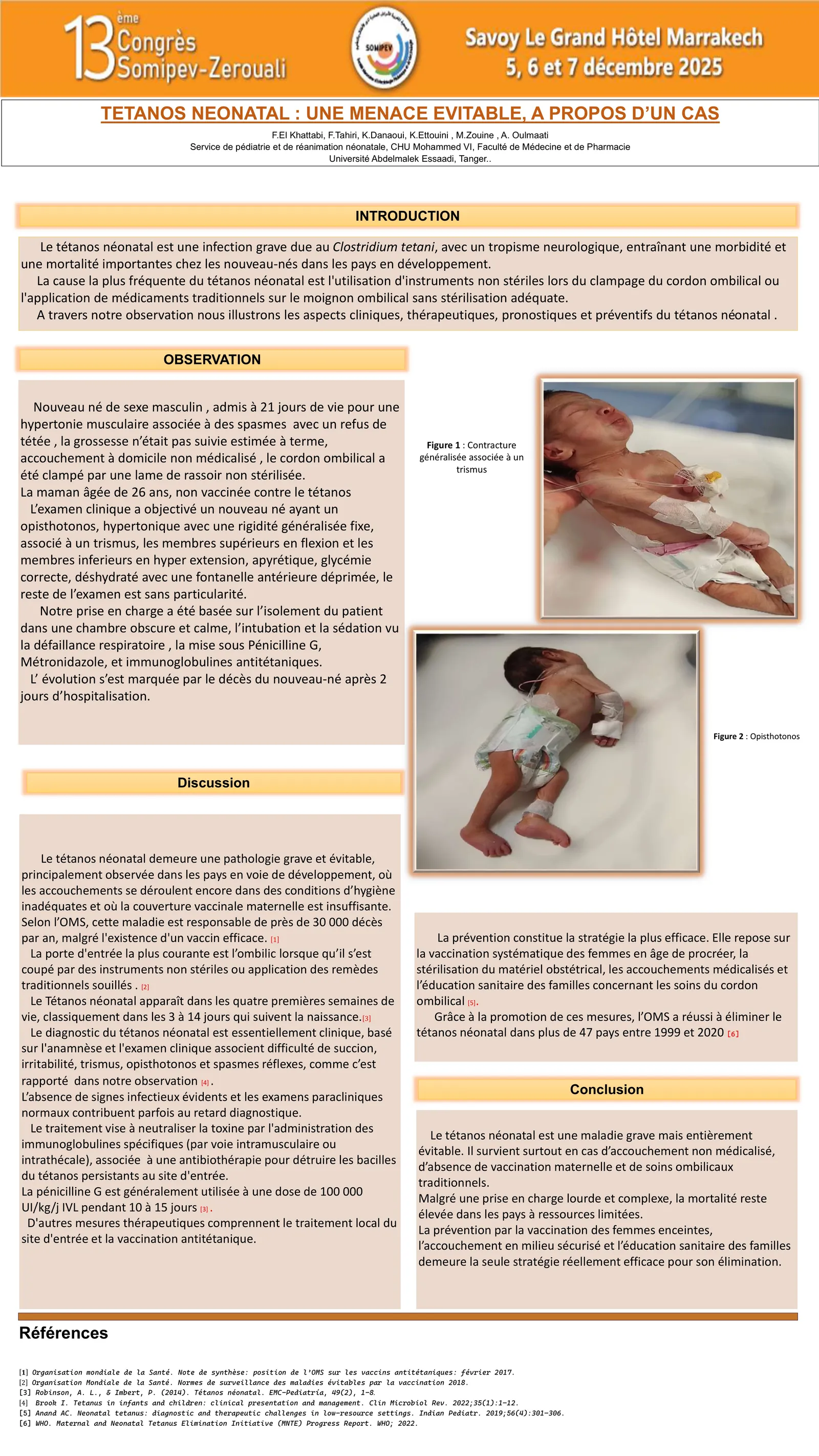 PediatricsNeonatal tetanus: a preventable threat, about a caseF. El Khattabi, F. Tahiri, K. Danaoui and 3 others
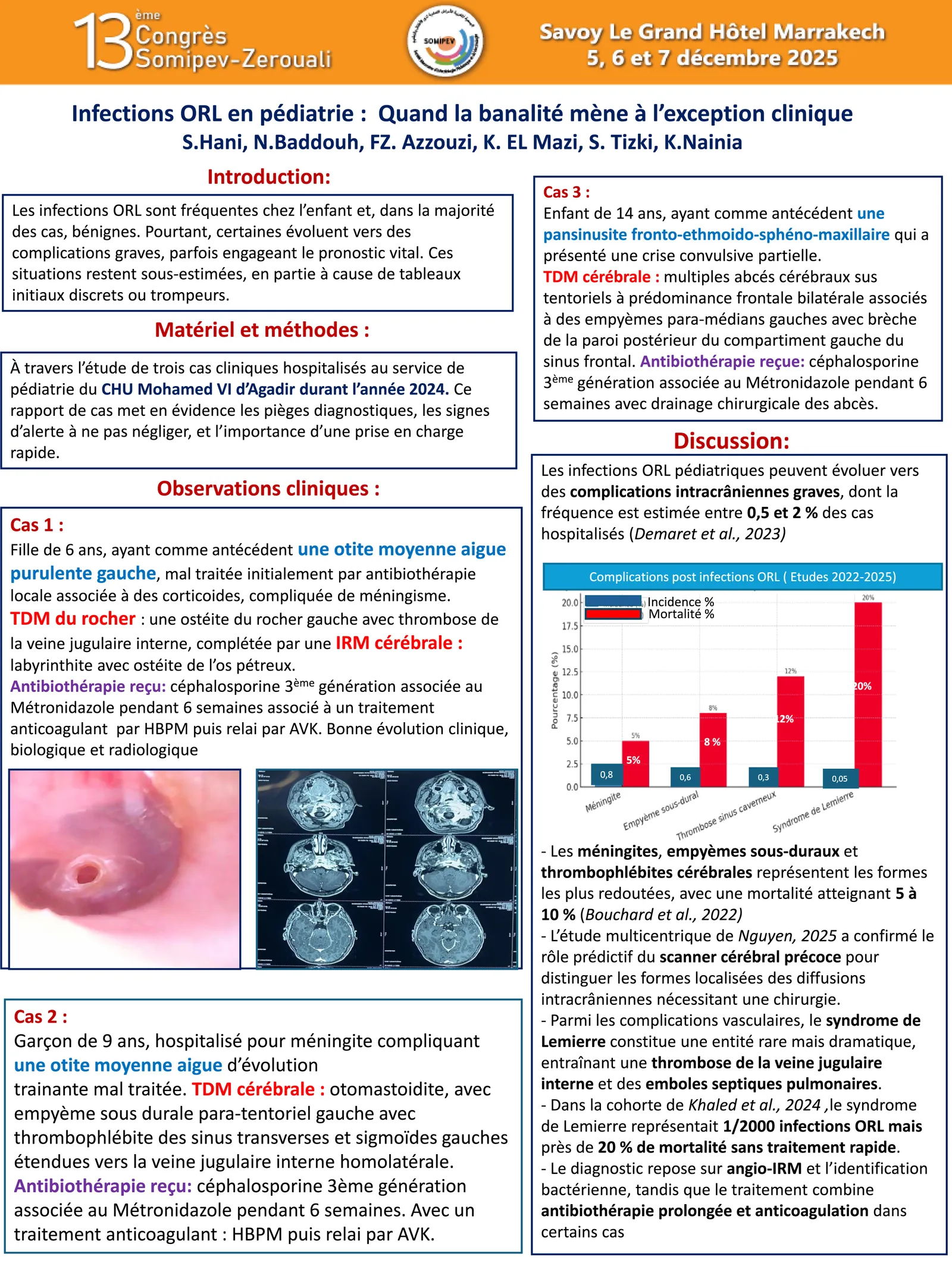 PediatricsENT infections in pediatrics: When common conditions lead to clinical exceptionsS. Hani, N. Baddouh, F. Azzouzi and 3 others