
From CDs to NCDs Dominance: Insights from Morbidity and Mortality data (2008-2024)
J. Maraka1,2✉, P.G. D'Arbela1,2, J Ssekitto1
- 1 St. Francis Hospital Nsambya
- 2 Uganda Martyrs University Mother Kevin Postgraduate Medical School
Received 28 October 2026 · Accepted 28 October 2026 · Published 28 October 2026
DOI: https://doi.org/10.5281/zenodo.23739088
Article PDF · Original poster (PDF)
- views
- 21
- downloads
- 8
- countries
- 10
Since publication · journal site and Zenodo archive · robots excluded
Abstract
Introduction
Uganda, like many sub-Saharan African countries, has been heavily affected by communicable diseases (CDs). However, recent times have seen a significant reduction in the impact of CDs on severity, hospitalization, and mortality, with a shift towards non-communicable diseases (NCDs). Health systems remain primarily structured for infectious disease care despite rising NCD admissions. There is limited longitudinal hospital-based data to quantify this shift and guide policy implementation.
Materials and methods
A retrospective comparative morbidity and mortality review was conducted comparing two periods, 2008-2010 and 2022-2024, using data from the Department of Medicine M&M records at St. Francis Hospital Nsambya. Data entry was done via Microsoft Excel and KoboTool system, cross-checked with patient records. Analysis included stratification by age, gender, and disease category (CD vs NCD). The sample size was 9,075 admissions.
Results
There was a marked rise in NCDs such as hypertension (7.5% to 24.4%), diabetes mellitus (9.8% to 15.5%), CKD (0.6% to 9.7%), stroke (3.5% to 10.2%), GI bleeding (1.1% to 3.9%), GERD (4.2% to 8.1%), CCF (2.1% to 5.2%), and thromboembolism (1.1% to 3.6%). Conversely, CDs like HIV admissions dropped from 24.3% to 6.4%, attributed to ART access and public health efforts. Malaria and TB also declined due to national and international efforts. Increased comorbidity was noted, with stroke and CKD linked to hypertension and diabetes. Urbanization, lifestyle changes, lack of early screening, weak integration of NCD care, underfunding, and policy gaps were identified as contributing factors.
Conclusion
The disease burden in Uganda is shifting from communicable to non-communicable diseases, necessitating policy and system adaptations. Recommendations include improving infrastructure with affordable dialysis and cardiology units, advanced workforce training, community prevention programs, budget rebalancing towards NCD care, and enhanced data collection frameworks to guide local policy and reduce dependence on WHO programs.
Original poster
References
- Narayan KMV, Ali MK, Koplan JP. Global noncommunicable diseases–where worlds meet. N Engl J Med. 2010;363(13):1196-1198. doi:10.1056/NEJMp1002024
- Gouda HN, Charlson F, Sorsdahl K, et al. Burden of non-communicable diseases in sub-Saharan Africa, 1990-2017: results from the Global Burden of Disease Study 2017. Lancet Glob Health. 2019;7(10):e1375-e1387. doi:10.1016/S2214-109X(19)30374-2
- Banatvala N, Akselrod S, Bovet P, Mendis S. The WHO Global Action Plan for the Prevention and Control of NCDs 2013–2030. In: Noncommunicable Diseases. Routledge; 2023.
- Meghani A, Ssemuggo C, Pariyo G, Hyder AA, Rutebemberwa E, Gibson DG. Curbing the Rise of Noncommunicable Diseases in Uganda: Perspectives of Policy Actors. Glob Health Sci Pract. 2021;9(1):149-159. doi:10.9745/GHSP-D-20-00051
- UNAIDS_FactSheet_en.pdf. Accessed May 30, 2025. https://www.unaids.org/sites/default/files/media_asset/UNAIDS_FactSheet_en.pdf
- Gilks CF, Crowley S, Ekpini R, et al. The WHO public-health approach to antiretroviral treatment against HIV in resource-limited settings. The Lancet. 2006;368(9534):505-510. doi:10.1016/S0140-6736(06)69158-7
- Gouda HN, Charlson F, Sorsdahl K, et al. Burden of non-communicable diseases in sub-Saharan Africa, 1990–2017: results from the Global Burden of Disease Study 2017. Lancet Glob Health. 2019;7(10):e1375-e1387. doi:10.1016/S2214-109X(19)30374-2
- Ayanore MA, Amuna N, Avisah M, et al. Towards Resilient Health Systems in Sub-Saharan Africa: A Systematic Review of the English Language Literature on Health Workforce, Surveillance, and Health Governance Issues for Health Systems Strengthening. Ann Glob Health. 2019;85(1). doi:10.5334/aogh.2514
- Beran D, Yudkin JS. Diabetes care in sub-Saharan Africa. Lancet Lond Engl. 2006;368(9548):1689-1698. doi:10.1016/S0140-6736(06)69704-3
- Peck R, Mghamba J, Vanobberghen F, et al. Preparedness of Tanzanian health facilities for outpatient primary care of hypertension and diabetes: a cross-sectional survey. Lancet Glob Health. 2014;2(5):e285. doi:10.1016/S2214-109X(14)70033-6
- Lare S, Chennaq M, Beavogui JK, et al. Risk Management Associated with the Cleaning–Disinfection of Dental Medical Devices in the Sterilization Process: Application of the FMECA Method. Journal of Applied Dentistry and Oral Sciences. 2026;12(3):148-156. doi:10.1177/30497418261454046
- Ahmed SM, Krishnan A, Karim O, et al. Delivering non-communicable disease services through primary health care in selected south Asian countries: are health systems prepared? Lancet Glob Health. 2024;12(10):e1706-e1719. doi:10.1016/S2214-109X(24)00118-9
- Siddharthan T, Kalyzes GURA, Morgan B, et al. The rural Uganda non-communicable disease (RUNCD) study: prevalence and risk factors of self-reported NCDs from a cross sectional survey. BMC Public Health. 2021;21(1):2036. doi:10.1186/s12889-021-12123-7
- Brouns E, Mulopo C, Mianda S, et al. Factors influencing non-communicable disease policy process in Sub-Saharan Africa: a scoping review. BMJ Public Health. 2025;3(2):e001409. doi:10.1136/bmjph-2024-001409
Related posters
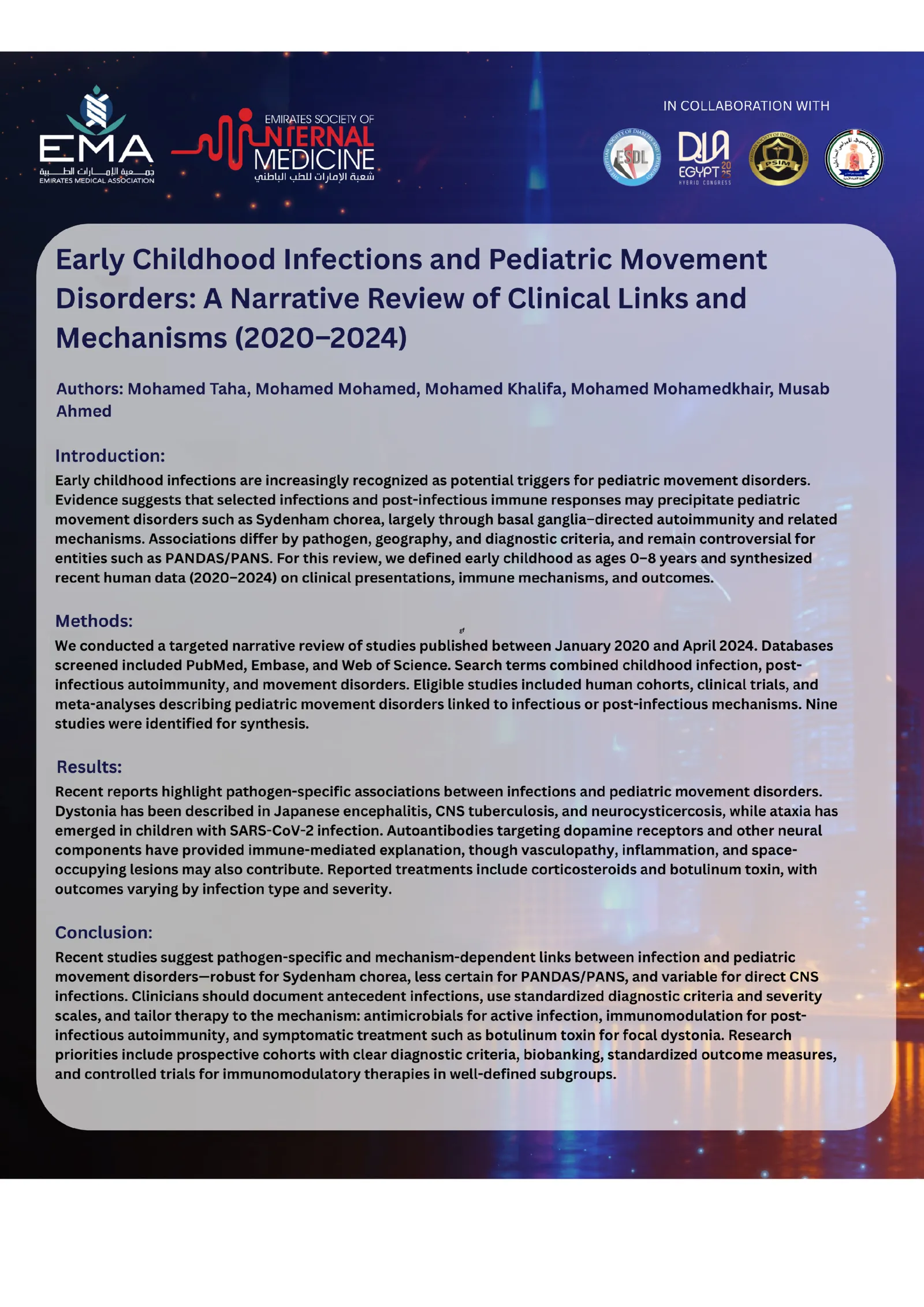 Internal MedicineEarly Childhood Infections and Pediatric Movement Disorders: A Narrative Review of Clinical Links and Mechanisms (2020-2024)M. Taha, M. Mohamed, M. Khalifa and 2 others
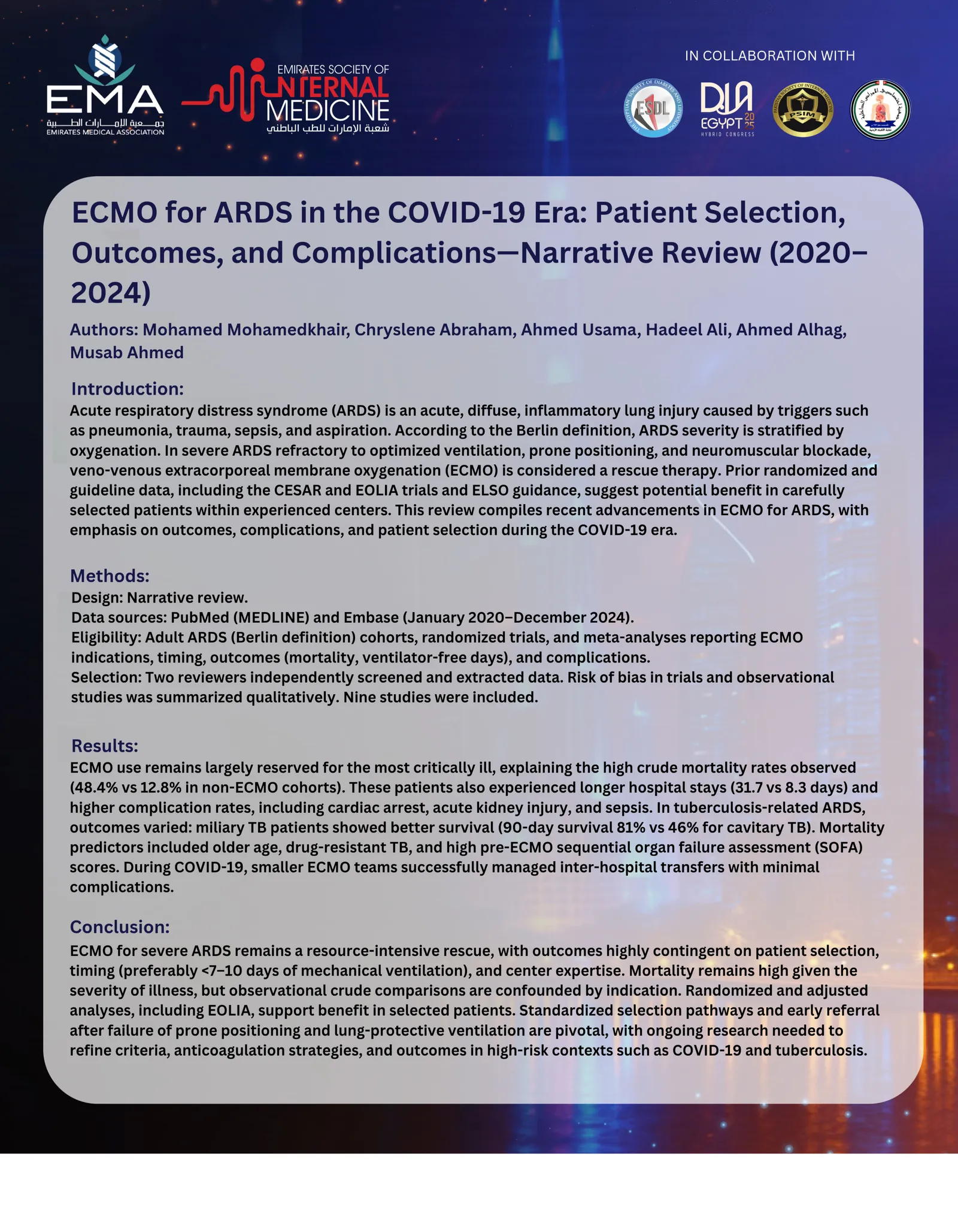 Internal MedicineECMO for ARDS in the COVID-19 Era: Patient Selection, Outcomes, and Complications—Narrative Review (2020–2024)M. Mohamedkhair, C. Abraham, A. Usama and 3 others
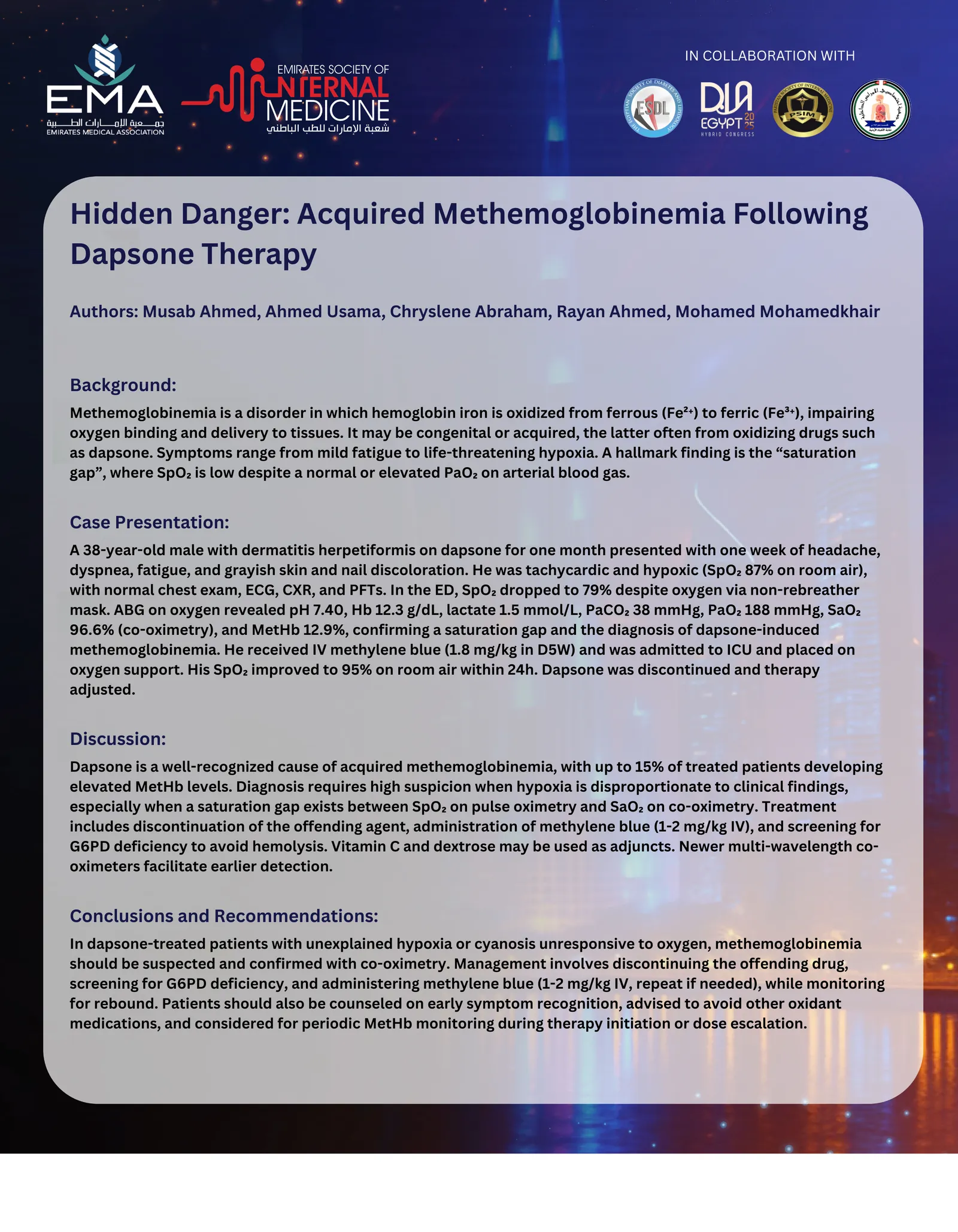 Internal MedicineHidden Danger: Acquired Methemoglobinemia Following Dapsone TherapyM. Ahmed, A. Usama, C. Abraham and 2 others