
Endocrine-Disrupting Chemicals in School Indoor Air and Childhood Health: Baseline evidence for climate-resilient and health-protective school environments
Georges Hatem1,2✉, Ana Margarida Faria1,2, Amina Salamova3, João Paulo Teixeira1,2, Otto Hänninen4, Carla Costa1,2, Joana Madureira1,2,5
- 1 Environmental Health Department, National Institute of Health, Dr. Ricardo Jorge, 4000-055 Porto, Portugal
- 2 EPIUnit ITR, Institute of Public Health of the University of Porto, University of Porto, Rua das Taipas, n.º 135, 4050-600 Porto, Portugal
- 3 Gangarosa Department of Environmental Health, Rollins School of Public Health, Emory University, Atlanta, Georgia 30322, United States
- 4 Civil Engineering Department, Faculty of Technology, P.O.Box 8000, FI-90014 University of Oulu, Oulu, Finland
- 5 Department of Epidemiology, National Institute of Health Dr Ricardo Jorge, Lisbon, 1649-016, Portugal
Received 28 October 2026 · Accepted 28 October 2026 · Published 28 October 2026
DOI: https://doi.org/10.5281/zenodo.23739205
Article PDF · Original poster (PDF)
- views
- 36
- downloads
- 8
- countries
- 12
Since publication · journal site and Zenodo archive · robots excluded
Abstract
Introduction
Endocrine-disrupting chemicals (EDCs) in school indoor air may affect children's respiratory and skin health. Schools are key indoor environments shaped by climate adaptation, where persistent pollutants such as PFAS and BFRs are present, potentially impacting children's health through multiple exposure pathways.
Materials and methods
This study assessed children's exposure to endocrine-disrupting chemicals in 20 public primary schools in Porto, Portugal, involving children aged 5-11 years. Methods included systematic reviews and meta-analyses of EDCs, PFAS, and childhood respiratory/skin outcomes, environmental monitoring with 28-day passive air sampling in 80 classrooms across 20 schools, and statistical analyses using meta-analysis, multivariable and multilevel regression to evaluate exposure-outcome associations.
Results
Systematic evidence included 61 EDC studies and 28 PFAS studies with 64,851 participants. Childhood health determinants showed multiple individual, familial, and environmental factors influencing respiratory and skin outcomes. Environmental monitoring detected total BFRs ranging from 28.12 to 154.54 pg/m³ and 64 PFAS targeted in 8 schools, with 66.5% indoor PFAA precursors. Associations were found between BFRs and asthma/wheezing, and PFAS with wheezing and eczema. Replacement BFRs predominated, but legacy BFRs remained detectable.
Conclusion
School indoor air may contribute to children's exposure to legacy and emerging PFAS and BFR. Observed associations highlight the interplay among chemical exposures, early-life factors, and indoor environments, supporting continued monitoring, climate-resilient and health-protective school environments, and longitudinal research to clarify potential health effects.
Original poster
References
- Hatem G, Faria AM, Costa C, Zhang Z, Dukes D, Hänninen O, Teixeira JP, Salamova A, Madureira J. Per-and polyfluoroalkyl substances (PFAS) in Portuguese primary schools: Occurrence in air and implications for children’s inhalation exposure. Environmental Research. 2026 Aug 21:125533.
- Hatem G, Faria AM, Kong M, Costa C, Slezakova K, do Carmo Pereira M, Hänninen O, Salamova A, Teixeira JP, Madureira J. Indoor air exposure to brominated flame retardants in public primary schools and associations with childhood respiratory and skin outcomes. Journal of Hazardous Materials. 2026 Aug 1;514:142814.
- Hatem G, Faria AM, Pinto MB, Salamova A, Teixeira JP, Costa C, Madureira J. Exposure to per-and poly-fluoroalkyl substances and respiratory and skin effects in children and adolescents: A systematic review and meta-analysis. Journal of Hazardous Materials. 2025 Jul 5;491:137978.
- Hatem G, Faria AM, Pinto MB, Teixeira JP, Salamova A, Costa C, Madureira J. Association between exposure to airborne endocrine disrupting chemicals and asthma in children or adolescents: A systematic review and meta-analysis. Environmental Pollution. 2025 Mar 15;369:125830.
Related posters
 Public HealthDetERminants and impact of diagnostic delay in people living with a RD in SpainJ. Benito-Lozano, G. Arias-Merino, B. Arconada-López and 3 others
 Public HealthExploring Out of Pocket Health Expenses among Urban Poor Migrant Population in India and its Impact on access to Health CareA. Singh
 Public HealthAn Investigation of the Impact of La Soufrière Eruption on the Lives of VincentiansC. Mitchell, D. Balfour, L. Campbell-George and 2 others
 Public HealthPreparing for Tomorrow: Tools, Skills, and Sensors in Forecasting Climate Change's Health ConsequencesD. Lindegger
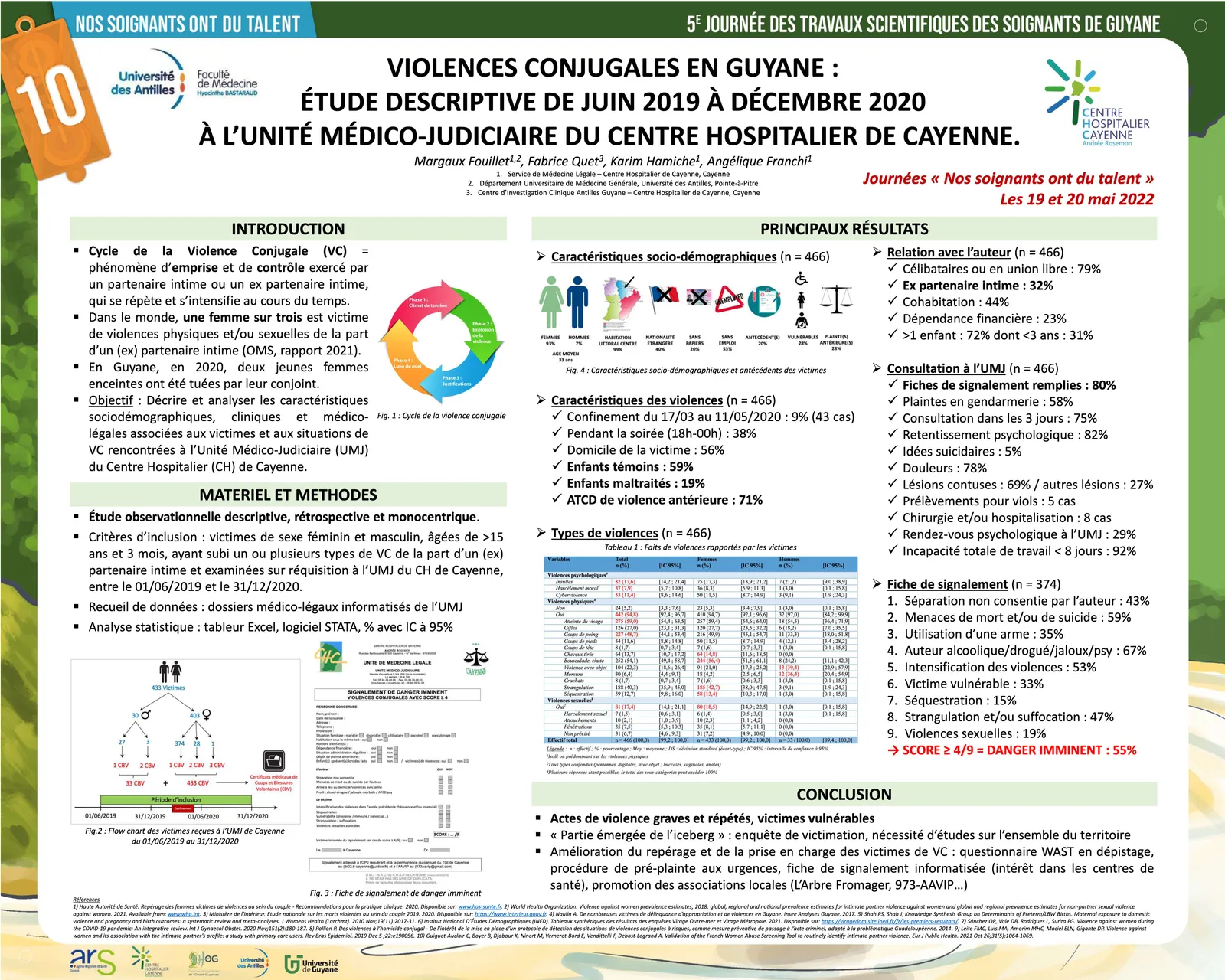 Public HealthIntimate Partner Violence in French Guiana: Descriptive Study from June 2019 to December 2020 at the Medico-Judicial Unit of Cayenne HospitalM. Fouillet, A. Franchi