
Development and optimization of an in vitro dissolution method for metronidazole and clotrimazole vaginal pessaries
Kristina Grncharoska1✉, Irena Slaveska Spirevska1, Tanja Bakovska Stoimenova1, Martina Miloshevska Ristovska1, Blagojche Damevski1, Meliha Babachikj1, Natasha Drashkovikj1
- 1 Replek Farm, Skopje, Str. Kozle 188 Skopje, Republic of North Macedonia
Received 3 November 2026 · Accepted 14 November 2026 · Published 14 November 2026
DOI: https://doi.org/10.5281/zenodo.24218646
Article PDF · Original poster (PDF)
- views
- 6
- downloads
- 6
- countries
- 4
Since publication · journal site and Zenodo archive · robots excluded
Abstract
Introduction
Metronidazole is a nitroimidazole antimicrobial agent active against anaerobic bacteria and protozoa, acting through reduction under anaerobic conditions to damage microbial DNA leading to cell death. Clotrimazole is an imidazole antifungal agent with broad activity against dermatophytes, yeasts, and molds by inhibiting ergosterol synthesis and disrupting fungal cell membrane integrity and function. The combination provides broad antibacterial and antifungal coverage for mixed vaginal infections. Current pharmacopoeial quality control of pessaries includes uniformity of mass, content uniformity, disintegration, and microbiological quality but does not assess drug release behavior. In vitro dissolution testing can provide important information on formulation performance, especially for poorly water-soluble compounds such as clotrimazole. Limited information exists on suitable dissolution conditions for combined pessary formulations.
Materials and methods
Dissolution method development and comparative dissolution testing versus the reference product were performed according to USP <711> Dissolution. Test pessaries (metronidazole/clotrimazole 500 mg/200 mg) were manufactured by Replek Farm Ltd., Skopje, N. Macedonia; the reference product (Zifex Duo) was obtained from Antibiotice S.A., Romania. Four surfactant-containing media were evaluated to ensure appropriate sink conditions due to clotrimazole's poor aqueous solubility. Samples were analyzed using a validated analytical method for simultaneous quantification of both actives. Dissolution test conditions included USP Apparatus 2 (paddle), 75 rpm paddle speed, 900 mL medium volume, temperature 37 ± 0.5 °C, and sampling times at 15, 30, 60, 120, and 240 minutes. Dissolution media investigated were phosphate buffer pH 4.5 with 0.5% or 2.0% Tween 80, acetate buffer with 1.0% sodium lauryl sulfate (SLS), and phosphate buffer with 1.0% SLS.
Results
Comparative dissolution studies were performed on three batches manufactured by Replek Farm (test) versus the reference product using surfactant-containing media at pH 4.5. Dissolution profiles showed comparable release between test and reference products, with all f2 similarity values ≥ 50. Phosphate buffer containing Tween 80 gave the highest and most reproducible f2 values for both metronidazole (70.7–76.2) and clotrimazole (62.9–66.0), identifying it as the most suitable medium for further method development and comparative testing. Surfactant type and concentration significantly influenced dissolution behavior of both APIs.
Conclusion
Surfactant-containing media are essential for the in vitro evaluation of metronidazole and clotrimazole pessaries due to clotrimazole's poor aqueous solubility. Phosphate buffer with Tween 80 provided the best dissolution performance and reproducibility, confirming the importance of dissolution medium optimization for reliable testing of combined vaginal pessary formulations.
Original poster
References
- Aulton, M.E., Taylor, K.M.G., 2018. Aulton's Pharmaceutics: The Design and Manufacture of Medicines, 5th ed. Elsevier, London.
- EDQM, 2023. European Pharmacopoeia, 11th ed. Council of Europe, Strasbourg.
- Haller, I., 1985. Clotrimazole clinical use. Am. J. Obstet. Gynecol. doi:10.1016/S0002-9378(85)80005-3.
- ICH, 1999. Q6A: Specifications: Test Procedures and Acceptance Criteria for New Drug Substances and Products. Geneva.
- Kramer, J. et al. Sex. Transm. Infect. 56(5), 285–290. doi:10.1136/sti.56.5.285.
- USP 43–NF 38, 2020. United States Pharmacopeial Convention, Rockville, MD, USA.
Related posters
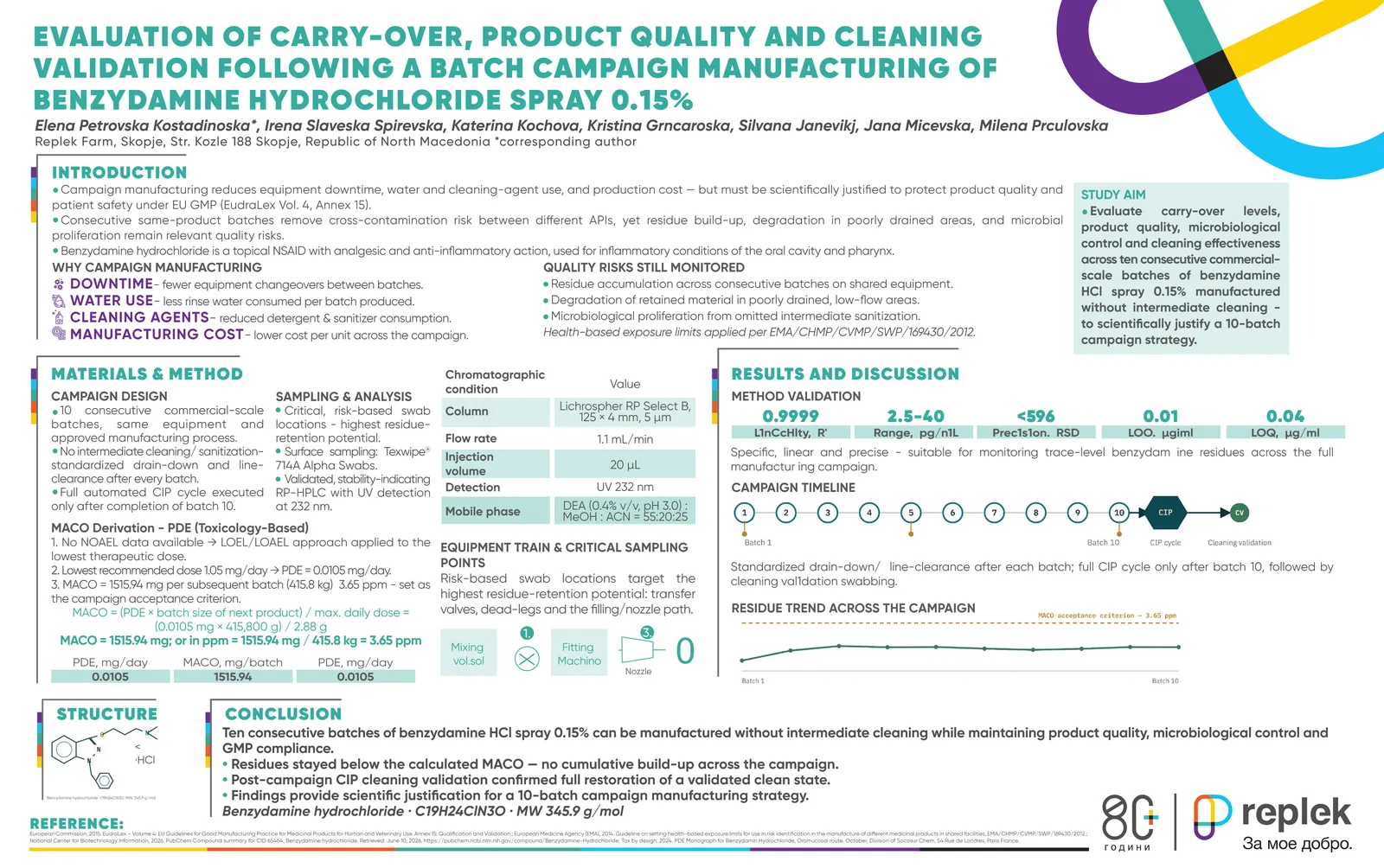 Pharmaceutical IndustryEvaluation of carry-over, product quality and cleaning validation following a batch campaign manufacturing of benzydamine hydrochloride spray 0.15%E. Petrovska Kostadinoska, I. Slaveska Spirevska, K. Kochova and 4 others
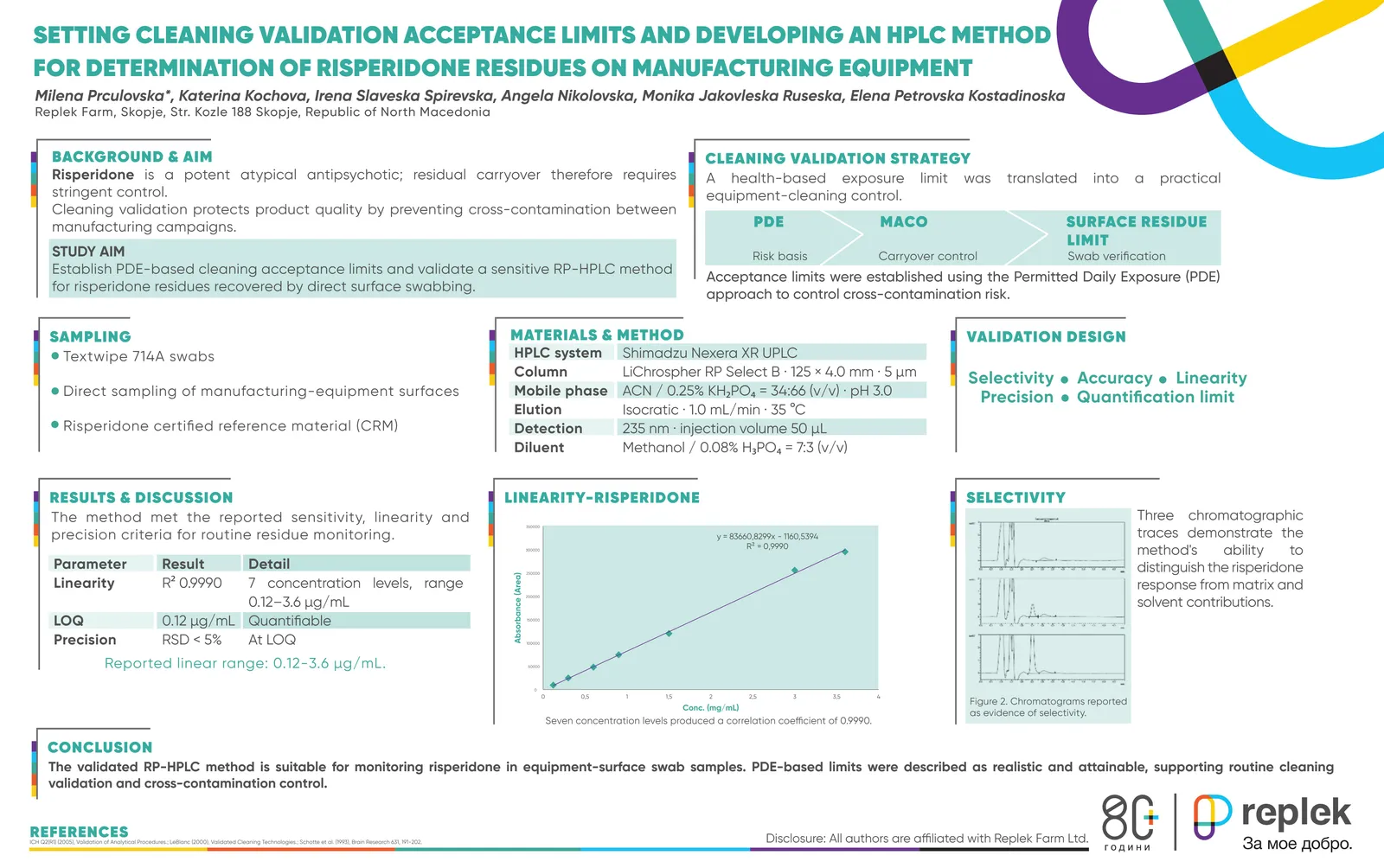 Pharmaceutical IndustrySetting cleaning validation acceptance limits and developing an HPLC method for determination of risperidone residues on manufacturing equipmentM. Prculovska, K. Kochova, I. Slaveska Spirevska and 3 others
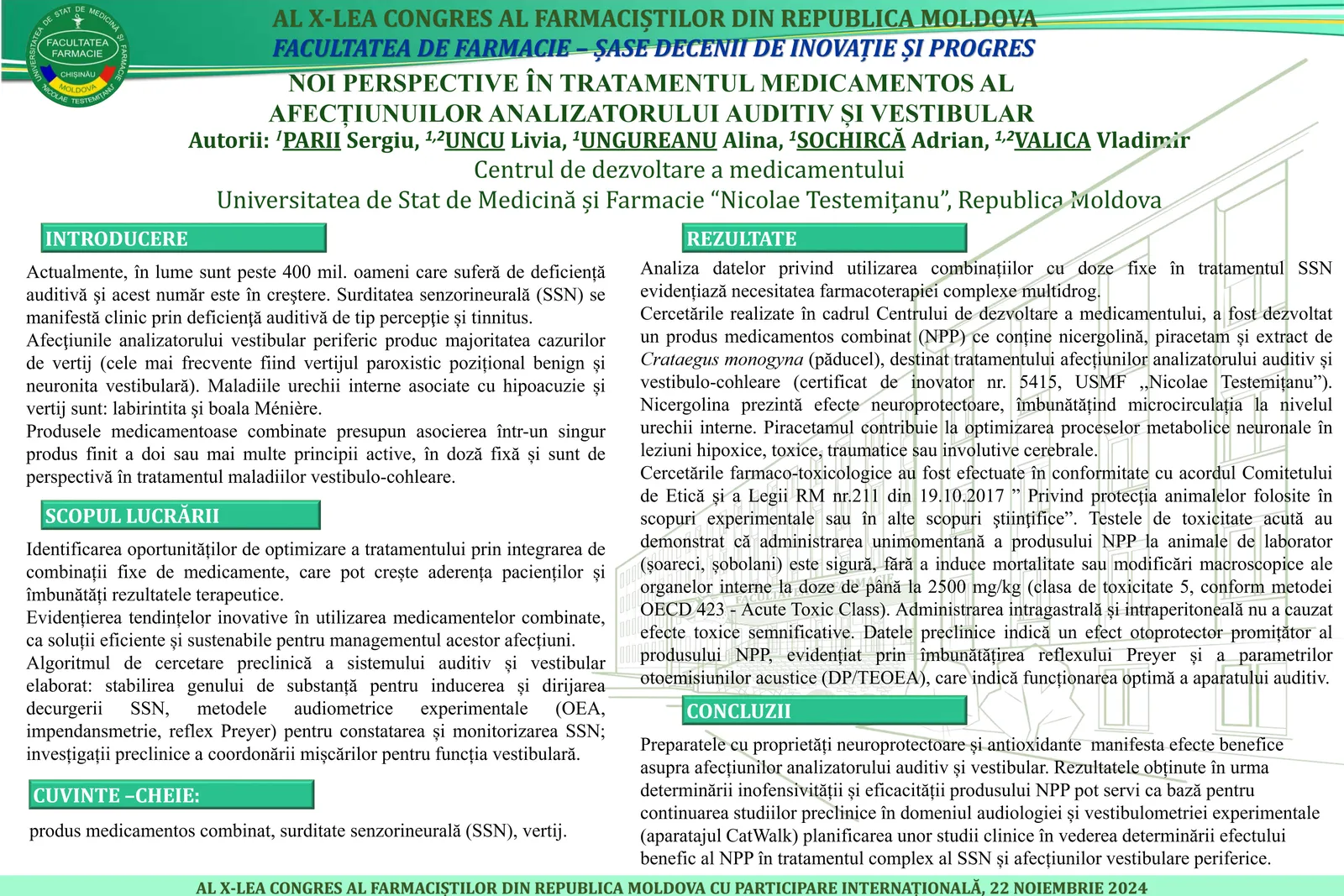 Pharmaceutical IndustryNew perspectives in the drug treatment of auditory and vestibular analyzer disordersS. Parii, L. Uncu, A. Ungureanu and 2 others
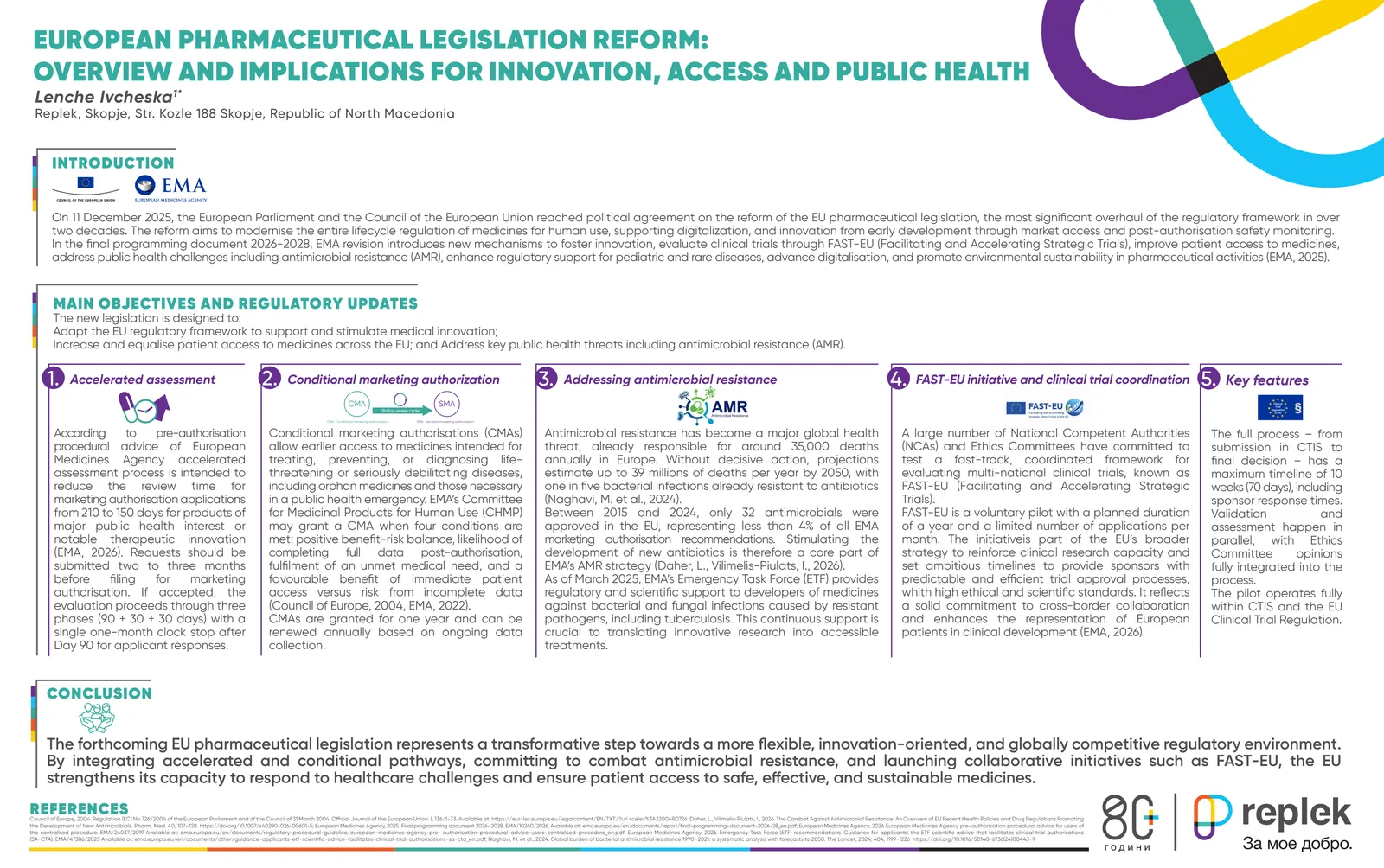 Pharmaceutical IndustryEuropean pharmaceutical legislation reform: Overview and implications for innovation, access and public healthL. Ivceska