
Otomycosis diagnosed at the Mohammed V Military Teaching Hospital in Rabat
English version of a poster presented in French.
H. Goura1,2,3✉, M. Laarabi2,3, N. Errami2,3, H. Naoui1,3, Be. Lmimouni1,3, M. Iken1,3
- 1 Service de Parasitologie-Mycologie de l’Hôpital Militaire d’Instruction Mohammed-V Rabat
- 2 Service ORL de l’Hôpital Militaire d’Instruction Mohammed-V Rabat
- 3 Faculté de Médecine et de Pharmacie, Université Mohammed V de Rabat
Received 28 September 2026 · Accepted 28 September 2026 · Published 28 September 2026 · Corrected 5 October 2026
DOI: https://doi.org/10.5281/zenodo.23023921
Article PDF · Original poster (PDF)
- views
- 37
- downloads
- 21
- countries
- 9
Since publication · journal site and Zenodo archive · robots excluded
Abstract
Introduction
Otomycoses are fungal infections of the external auditory canal often underdiagnosed due to nonspecific symptoms and clinical resemblance to other ear conditions. Their prevalence is increasing, highlighting the importance of an in-depth study to better understand their epidemiology, clinical presentation, risk factors, and management.
Materials and methods
Retrospective study over eleven and a half months (January-December 2023) at the parasitology-mycology laboratory in collaboration with the ENT department of the Mohammed V Military Teaching Hospital. Patients consulted for otitis media or externa. Data were collected via questionnaire and analyzed using Excel. Sampling consisted of swabbing performed by an ENT physician, followed by microscopic examination and culture on specific media at 27°C for 14 days.
Results
The study included 52 patients with 60 samples. Female predominance (35 women, 17 men) with a mean age of 50.8 years. The most affected age group was >60 years. The dominant risk factor was cotton swab use. Otalgia was the most frequent symptom. Type 2 diabetes was the most observed comorbidity. Aspergillus niger was the most implicated fungus.
Conclusion
This study is important to fill gaps in the understanding of otomycosis at HMIMV and to guide the implementation of better clinical practices. It reveals interesting trends regarding risk factors, which may direct future prevention and management strategies.
Original poster
References
- Epidemiology of otomycoses at the University Hospital of Yopougon (Abidjan-Ivory Coast)
- Prévalence et facteurs de risqué des otomycoses à l’Hopital Militaire d’instruction Mohamed V de Rabat Thèse pour l’obtention de doctorat en médecine à la faculté de médecine de Rabat, numéro :1
- Baujat B, De Minteguiaga C, Lecanu JB. Is sudden sensorineural hearing loss a therapeutic emergency? Early results in a prospectivecohort of 136 patients. Ann OtolaryngolChirCervicofac. 2002 ;119: 3-11.
- Araiza J, Canseco P, Bonifaz A. Otomycosis: clinical and mycological studyof 97 cases. Rev LaryngolOtolRhinol (Bord). 2006 ; 127 :251-4.
- Ozcan MK, Ozcan M, Karaarslan A, Karaarslan F. Otomycosis inTurkey: predisposing factors, aetiology and therapy. J LaryngolOtol. 2003 ; 117: 39-42.
Related posters
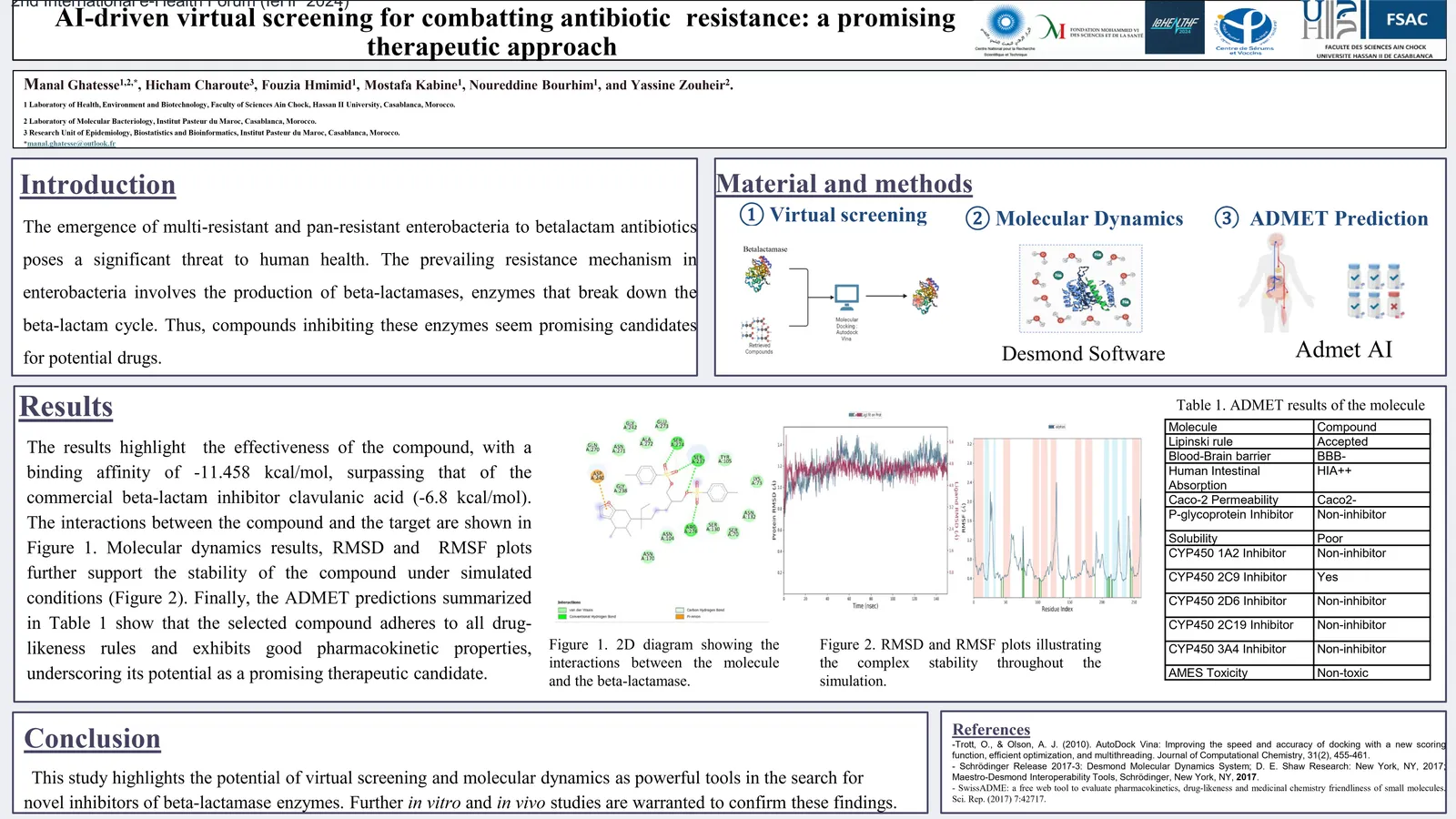 MicrobiologyAI-driven virtual screening for combatting antibiotic resistance: a promising therapeutic approachM. Ghatesse, H. Charoute, F. Hmimid and 3 others
 MicrobiologyDevelopment and validation of analytical method for microbiological quality control of ketoconazole cream 2%D. Cvetkoska, D. Shushleski, I. Slaveska Spirevska and 2 others
 MicrobiologyDevelopment and validation of analytical method for microbiological quality control of ketoconazole shampoo 2%S. Ristevska, D. Shushleski, M. Velkovski and 2 others
 MicrobiologyDevelopment and validation of analytical method for microbiological quality control of cannabis oil solutionM. Velkovski, D. Shushleski, I. Slaveska Spirevska and 3 others
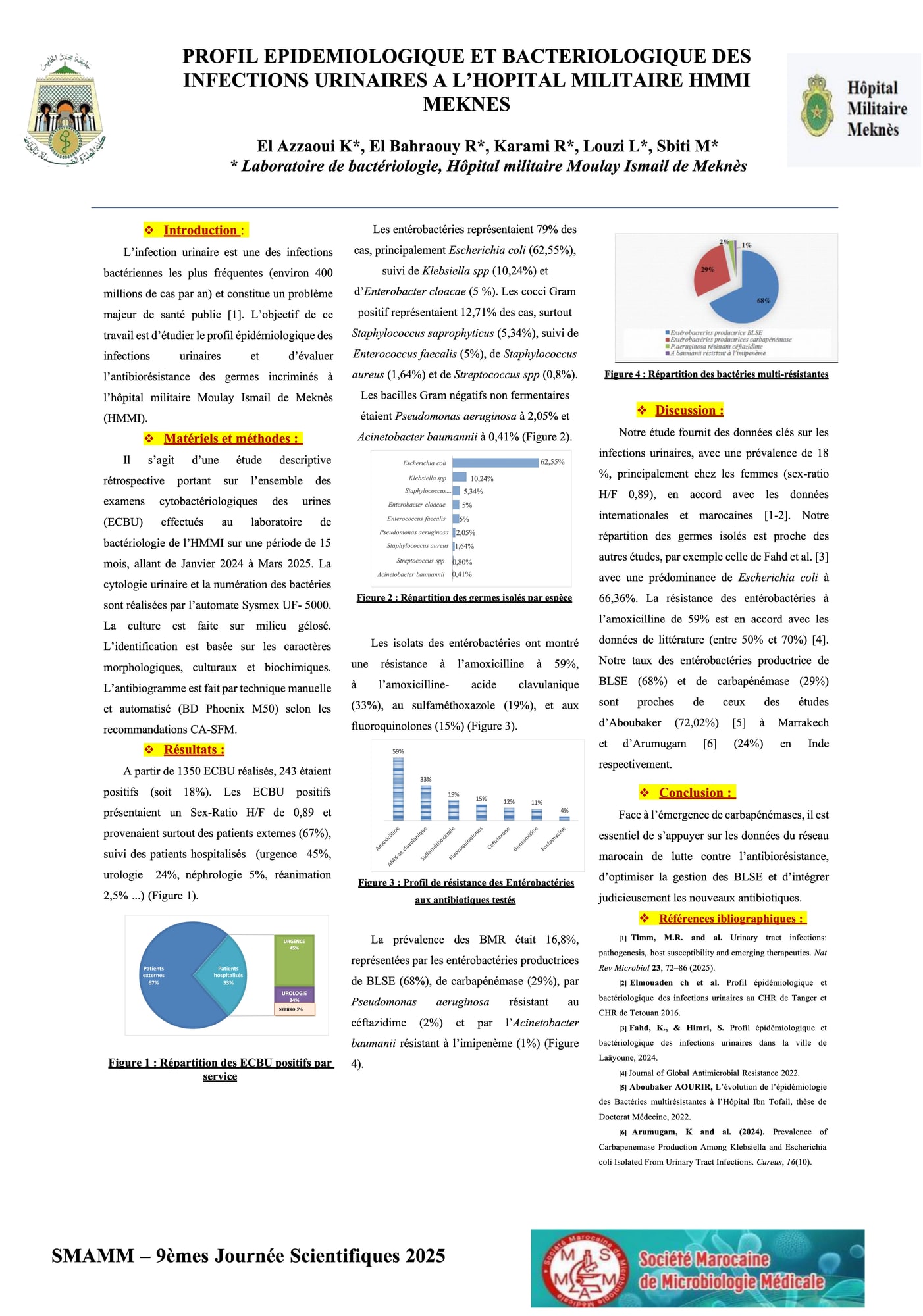 MicrobiologyEpidemiological and bacteriological profile of urinary tract infections at the Military Hospital HMMI MeknesK. El Azzaoui, R. El Bahraouy, R. Karami and 2 others