
Development and validation of analytical method for microbiological quality control of cannabis oil solution
Marjan Velkovski1✉, Damjan Shushleski1, Irena Slaveska Spirevska1, Elena Metcheva1, Silvana Ristevska1, Ivana Karchicka1
- 1 Replek Farm, Kozle str. 188, Skopje, North Macedonia
Received 22 October 2026 · Accepted 26 October 2026 · Published 26 October 2026
DOI: https://doi.org/10.5281/zenodo.23675302
Article PDF · Original poster (PDF)
- views
- 28
- downloads
- 9
- countries
- 9
Since publication · journal site and Zenodo archive · robots excluded
Abstract
Introduction
As of January 22, 2021, the US FDA has approved Cannabidiol (CBD) and Tetrahydrocannabinol (THC) containing medications for therapeutic use. Exogenous cannabinoids, such as THC and CBD, and their effect on the endocannabinoid system are frequently discussed regarding their role in oncology related diseases.
Materials and methods
European Pharmacopoeia specifies reference criteria for microbiological quality control as "Special Ph. Eur. provisions for oral dosage forms containing raw materials of natural origin" with specified quality control parameters: Total Aerobic Microbial Count (TAMC), Total Combined Yeasts and Molds Count (TYMC), Total Bile-tolerant GN bacteria (TBTGN), as well as Absence of Staphylococcus aureus, Absence of Escherichia coli and Absence of Salmonella.
Results
The Recovery Percent results obtained from all quantitative challenge tests show that the tested Cannabis oil solution product doesn’t demonstrate significant product matrix interference or antimicrobial properties against any reference microorganisms while using primary suspension of the product (1:10 dilution in TSB), thus resulting with readable plate count and Recovery factor values ≤2 for all testing microorganisms. The results obtained from qualitative challenge tests for Absence of Staphylococcus aureus/ml, Escherichia coli/ml and Salmonella/10ml, demonstrated positive recovery on all three testing iterations, with relative Recovery rate of 100% for all specified microorganisms while using primary suspension (1:10 dilution in TSB) of the product.
Conclusion
The Cannabis oil solution: THC 40 mg + CBD 40 mg/1 ml doesn’t demonstrate product matrix or antimicrobial interference by 1:10 dilution in Tryptic Soy Broth, without the necessity for addition of any surface active agent, such as isopropyl myristate or polysorbate 80. The stabilization of the primary suspension of the product is achieved by temperature controlled dispersion.
Original poster
References
- MacGillivray, N., 2015. Sir William Brooke O'Shaughnessy (1808–1889), MD, FRS, LRCS Ed: Chemical pathologist, pharmacologist and pioneer in electric telegraphy. J. Med Biogr. 25(3):186-196. doi: 10.1177/0967772015596276.
- Bodine M, Kemp AK. Medical Cannabis Use In Oncology. 2022 May 15. In: StatPearls [Internet]. Treasure Island (FL): StatPearls Publishing; 2022 Jan-. PMID: 34283433.
- European Pharmacopoeia - 10th edition, Volume 1, 2019. Council of Europe, 67075 Strasbourg, France, pp, 185-194.
Related posters
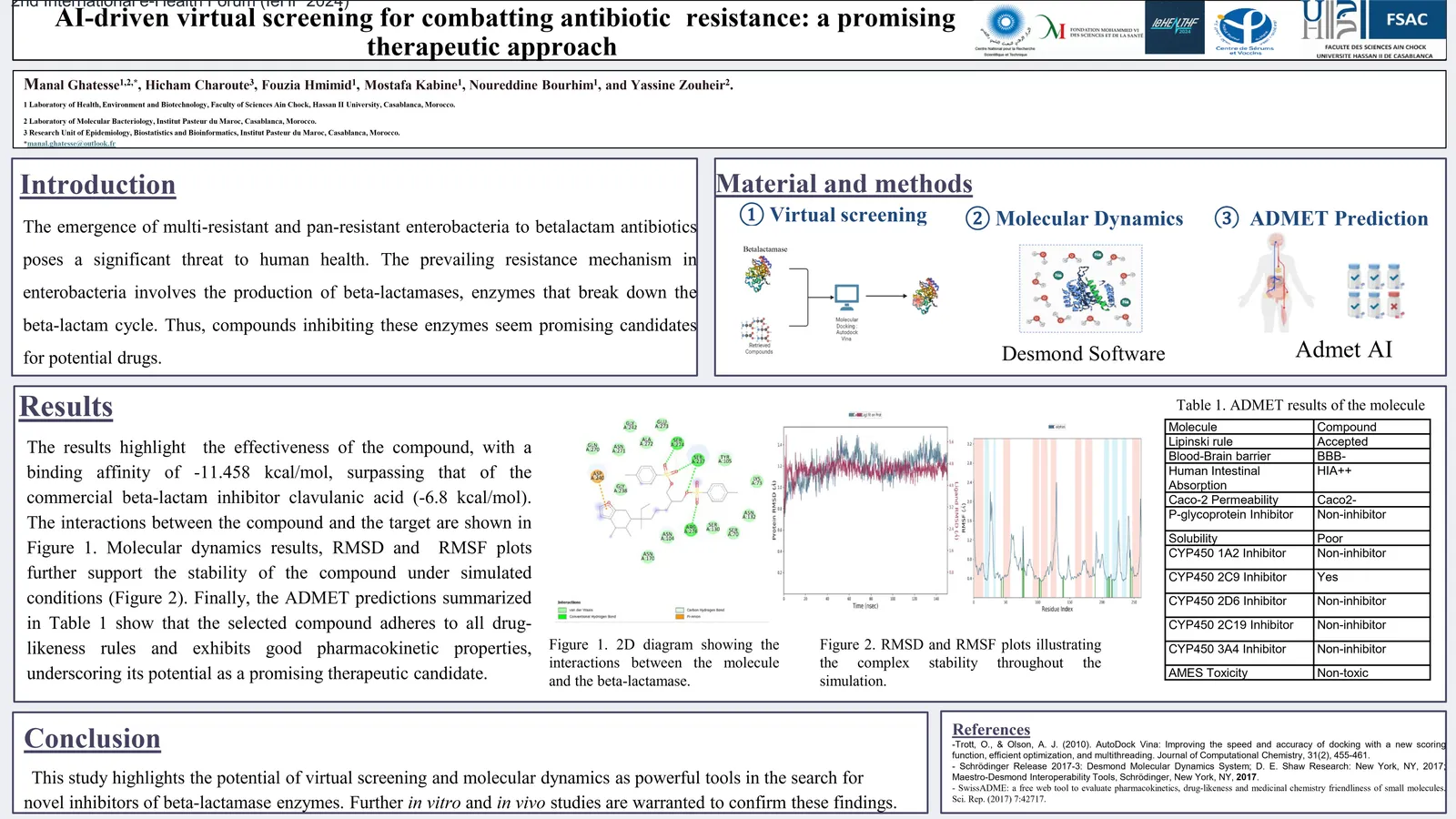 MicrobiologyAI-driven virtual screening for combatting antibiotic resistance: a promising therapeutic approachM. Ghatesse, H. Charoute, F. Hmimid and 3 others
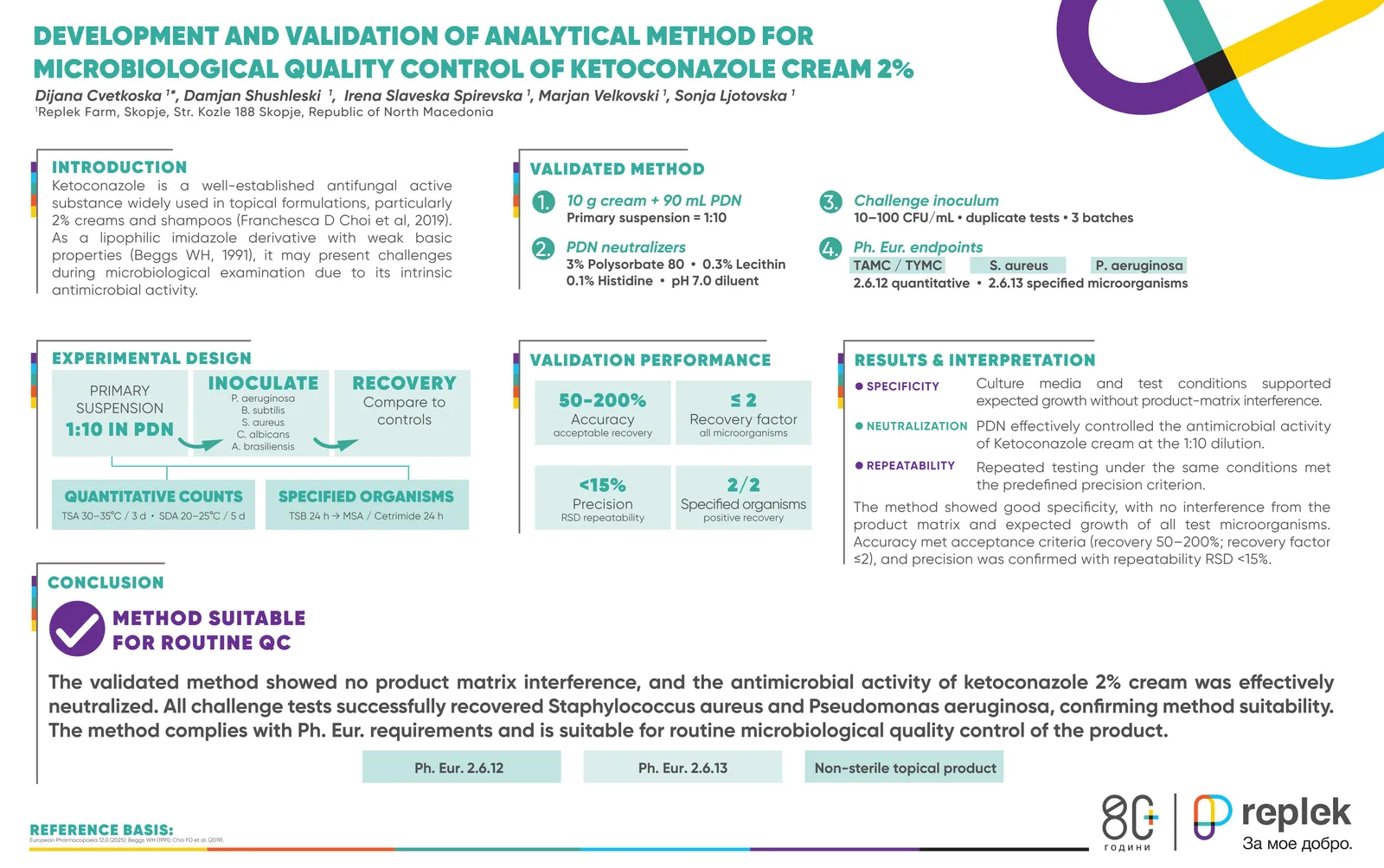 MicrobiologyDevelopment and validation of analytical method for microbiological quality control of ketoconazole cream 2%D. Cvetkoska, D. Shushleski, I. Slaveska Spirevska and 2 others
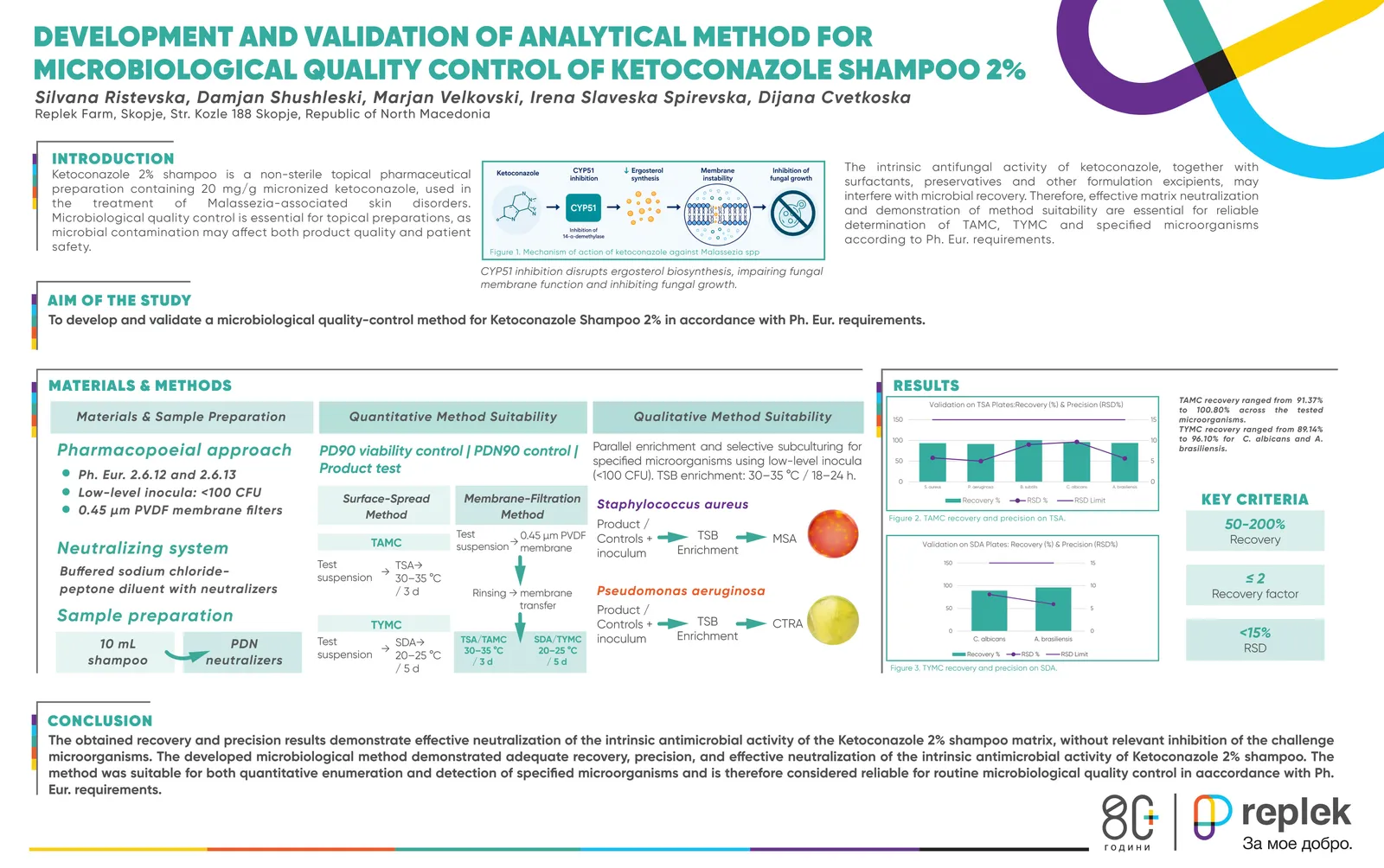 MicrobiologyDevelopment and validation of analytical method for microbiological quality control of ketoconazole shampoo 2%S. Ristevska, D. Shushleski, M. Velkovski and 2 others
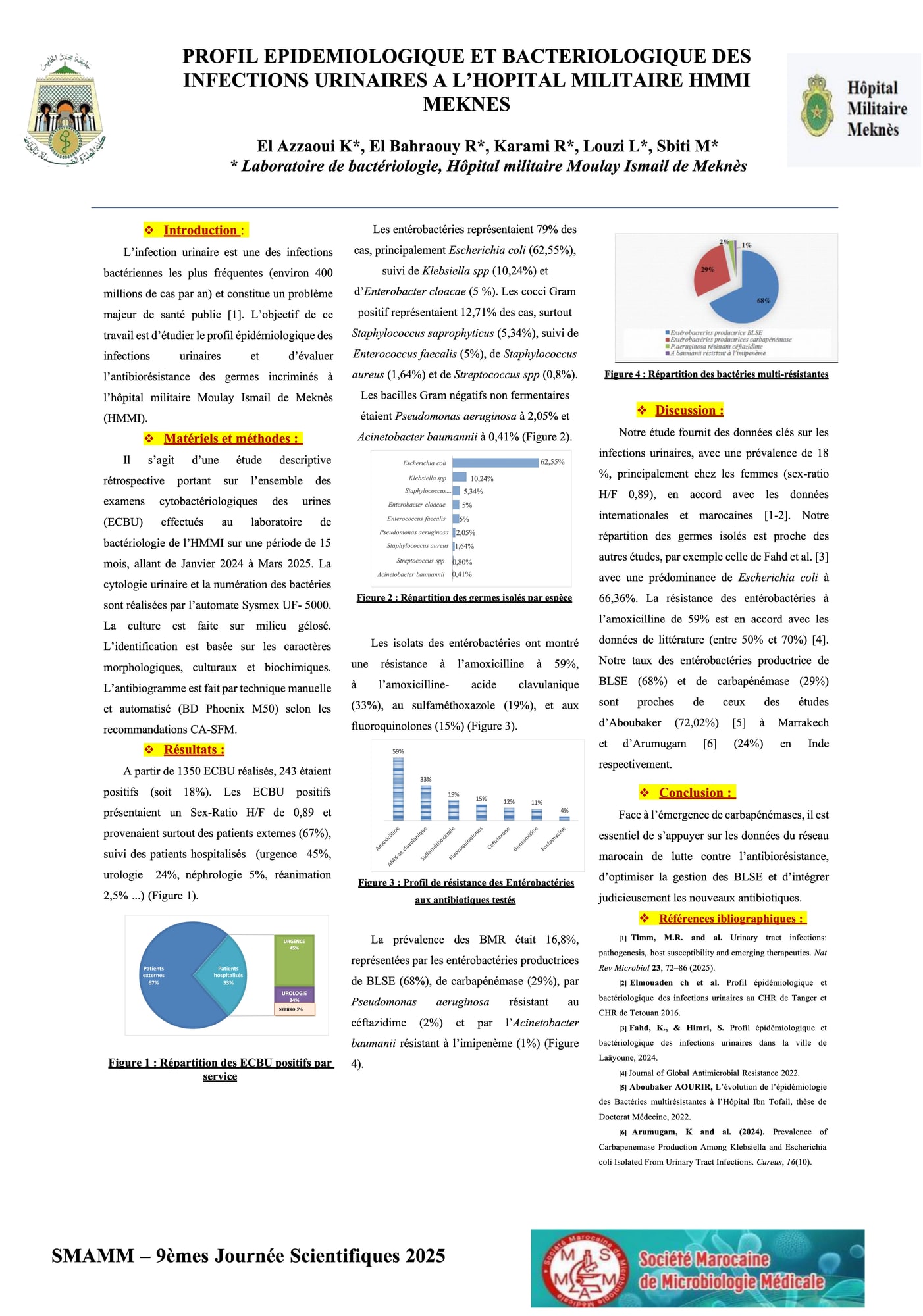 MicrobiologyEpidemiological and bacteriological profile of urinary tract infections at the Military Hospital HMMI MeknesK. El Azzaoui, R. El Bahraouy, R. Karami and 2 others
 MicrobiologyOtomycosis diagnosed at the Mohammed V Military Teaching Hospital in RabatH. Goura, M. Laarabi, N. Errami and 3 others