
Development and validation of analytical method for microbiological quality control of ketoconazole shampoo 2%
Silvana Ristevska1✉, Damjan Shushleski1, Marjan Velkovski1, Irena Slaveska Spirevska1, Dijana Cvetkoska1
- 1 Replek Farm, Skopje, Str. Kozle 188 Skopje, Republic of North Macedonia
Received 29 October 2026 · Accepted 29 October 2026 · Published 29 October 2026
DOI: https://doi.org/10.5281/zenodo.23772395
Article PDF · Original poster (PDF)
- views
- 20
- downloads
- 7
- countries
- 6
Since publication · journal site and Zenodo archive · robots excluded
Abstract
Introduction
Ketoconazole 2% shampoo is a non-sterile topical pharmaceutical preparation containing 20 mg/g micronized ketoconazole, used in the treatment of Malassezia-associated skin disorders. Microbiological quality control is essential for topical preparations, as microbial contamination may affect both product quality and patient safety. The intrinsic antifungal activity of ketoconazole, together with surfactants, preservatives and other formulation excipients, may interfere with microbial recovery. Therefore, effective matrix neutralization and demonstration of method suitability are essential for reliable determination of TAMC, TYMC and specified microorganisms according to Ph. Eur. requirements.
Materials and methods
Pharmacopoeial approach was used following Ph. Eur. 2.6.12 and 2.6.13 with low-level inocula (<100 CFU) and 0.45 µm PVDF membrane filters. Neutralizing system consisted of buffered sodium chloride-peptone diluent with neutralizers. Sample preparation involved 10 mL shampoo with PDN neutralizers. Quantitative method suitability was tested by surface-spread and membrane-filtration methods on TSA and SDA media at specified temperatures and durations. Qualitative method suitability involved parallel enrichment and selective subculturing for specified microorganisms using low-level inocula (<100 CFU) with TSB enrichment at 30–35 °C for 18–24 h.
Results
TAMC recovery ranged from 91.37% to 100.80% across the tested microorganisms. TYMC recovery ranged from 89.14% to 96.10% for C. albicans and A. brasiliensis. Recovery and precision results demonstrated effective neutralization of the intrinsic antimicrobial activity of the Ketoconazole 2% shampoo matrix without relevant inhibition of the challenge microorganisms.
Conclusion
The developed microbiological method demonstrated adequate recovery, precision, and effective neutralization of the intrinsic antimicrobial activity of Ketoconazole 2% shampoo. The method was suitable for both quantitative enumeration and detection of specified microorganisms and is therefore considered reliable for routine microbiological quality control in accordance with Ph. Eur. requirements.
Original poster
Related posters
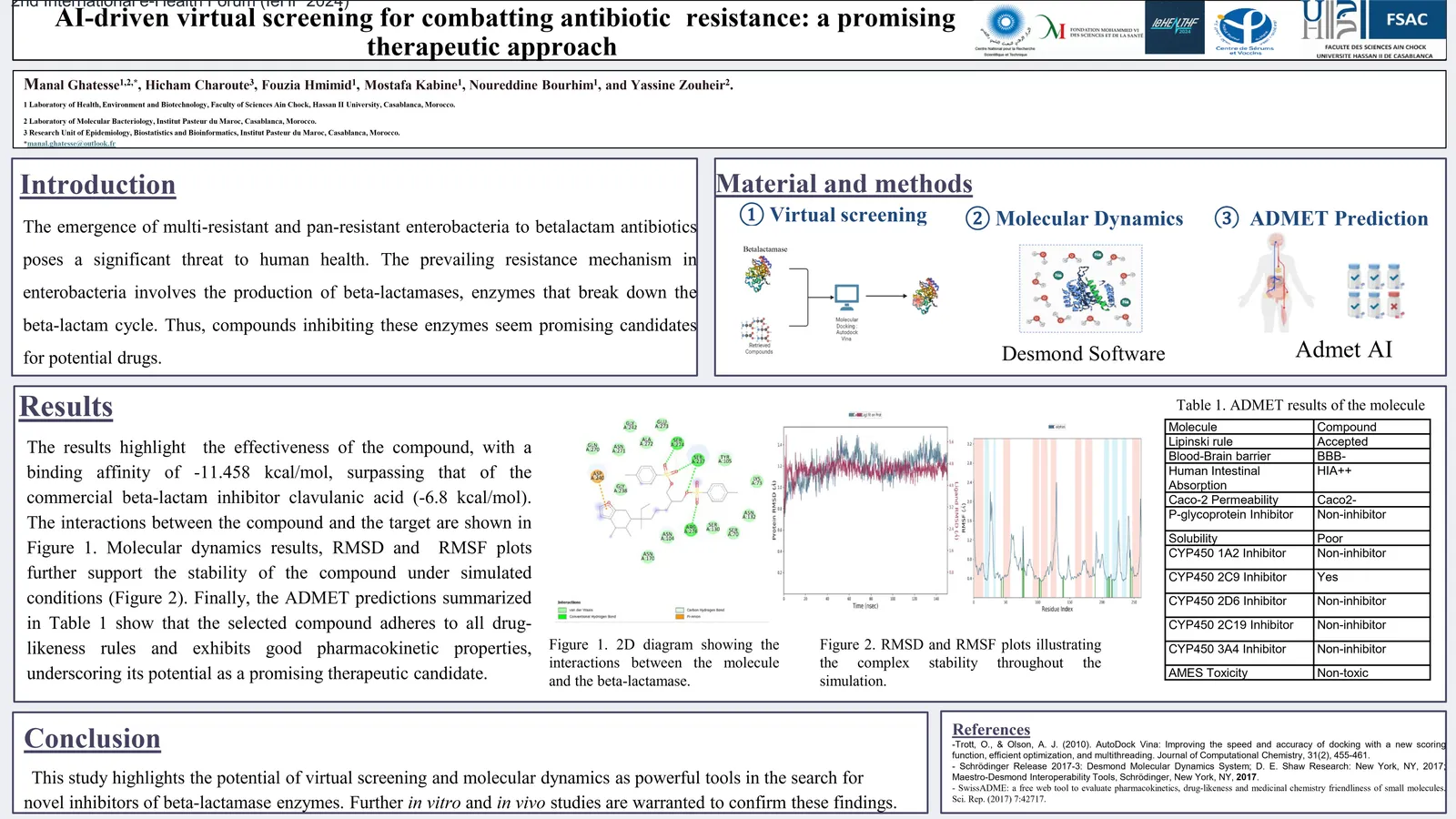 MicrobiologyAI-driven virtual screening for combatting antibiotic resistance: a promising therapeutic approachM. Ghatesse, H. Charoute, F. Hmimid and 3 others
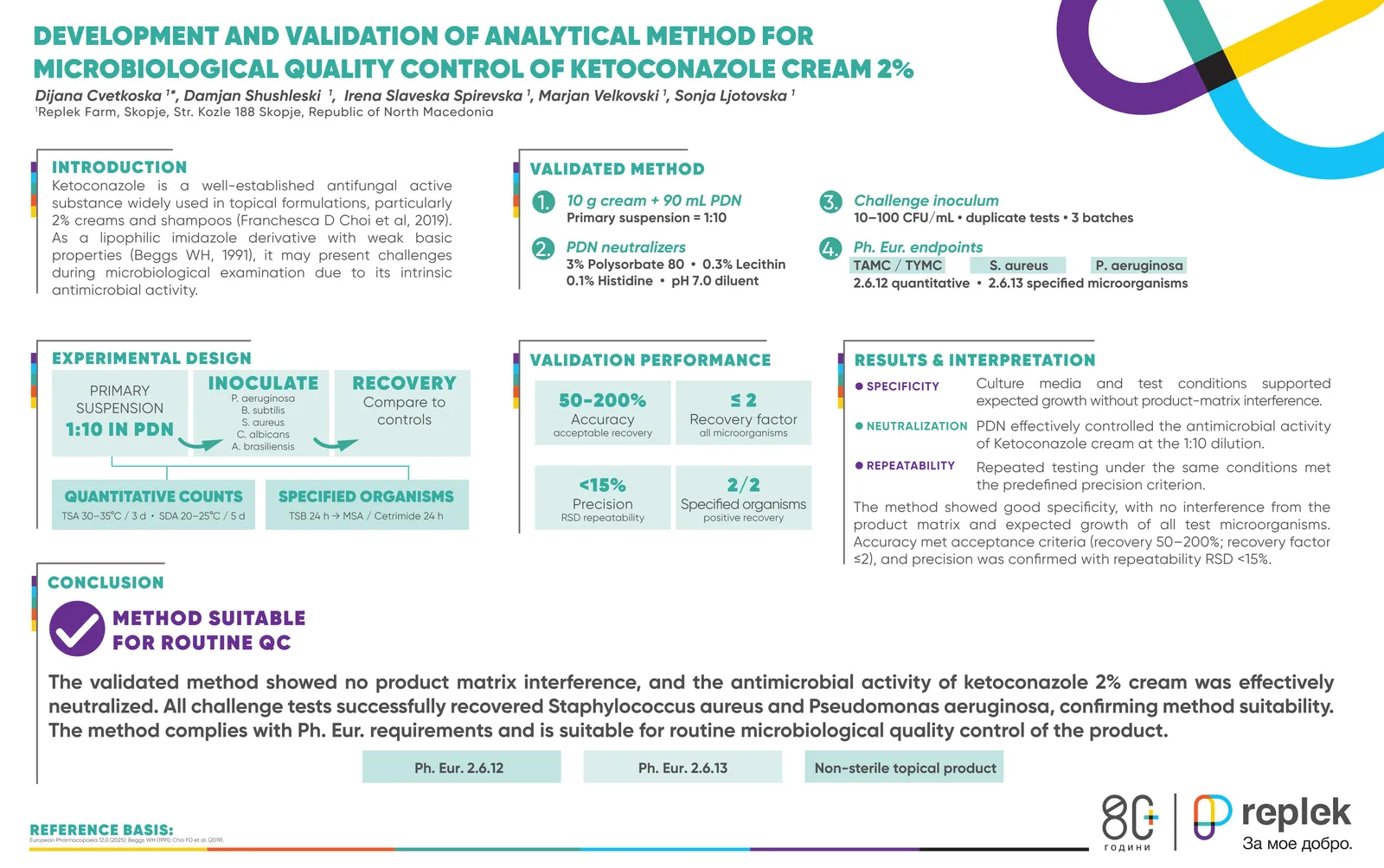 MicrobiologyDevelopment and validation of analytical method for microbiological quality control of ketoconazole cream 2%D. Cvetkoska, D. Shushleski, I. Slaveska Spirevska and 2 others
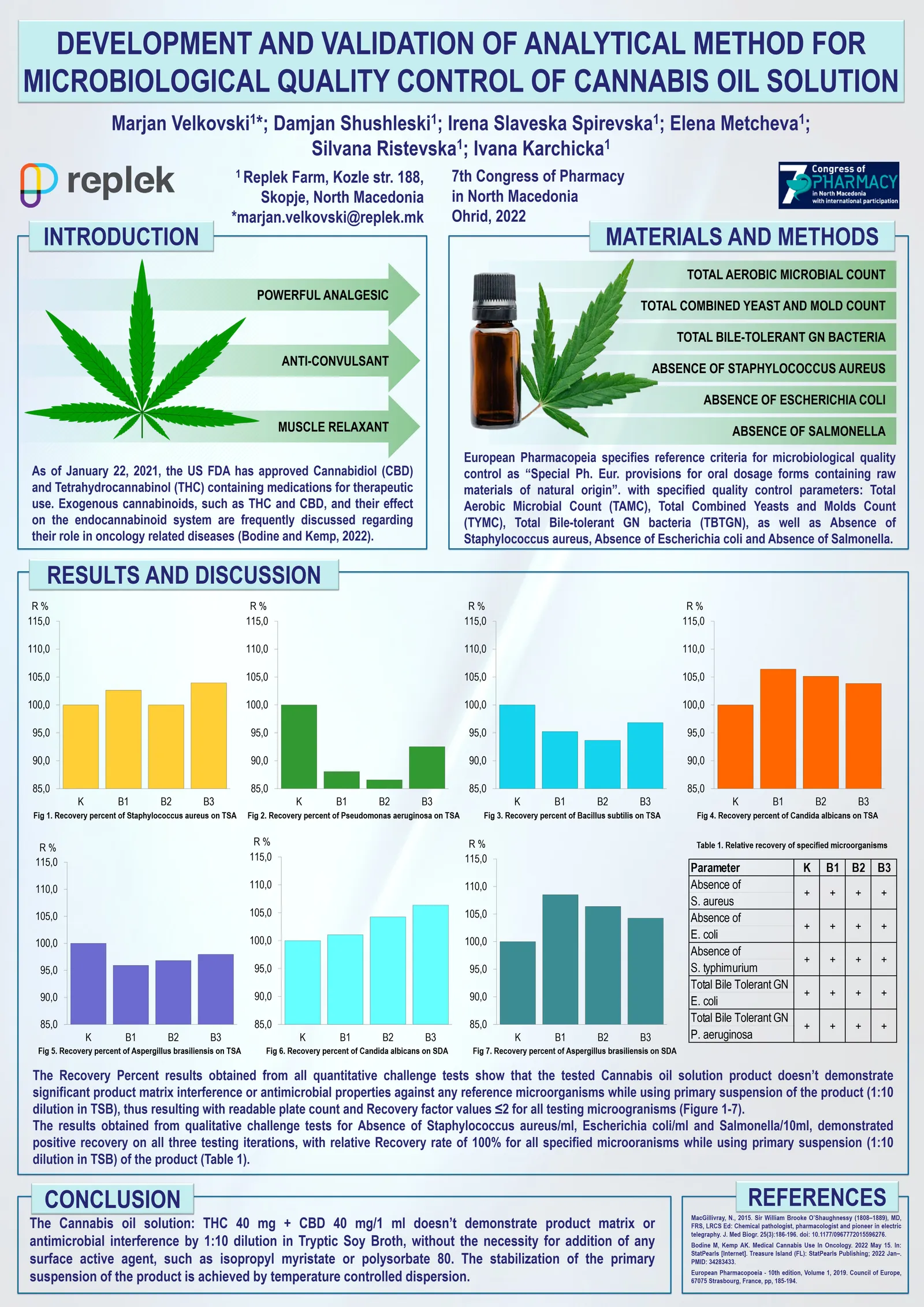 MicrobiologyDevelopment and validation of analytical method for microbiological quality control of cannabis oil solutionM. Velkovski, D. Shushleski, I. Slaveska Spirevska and 3 others
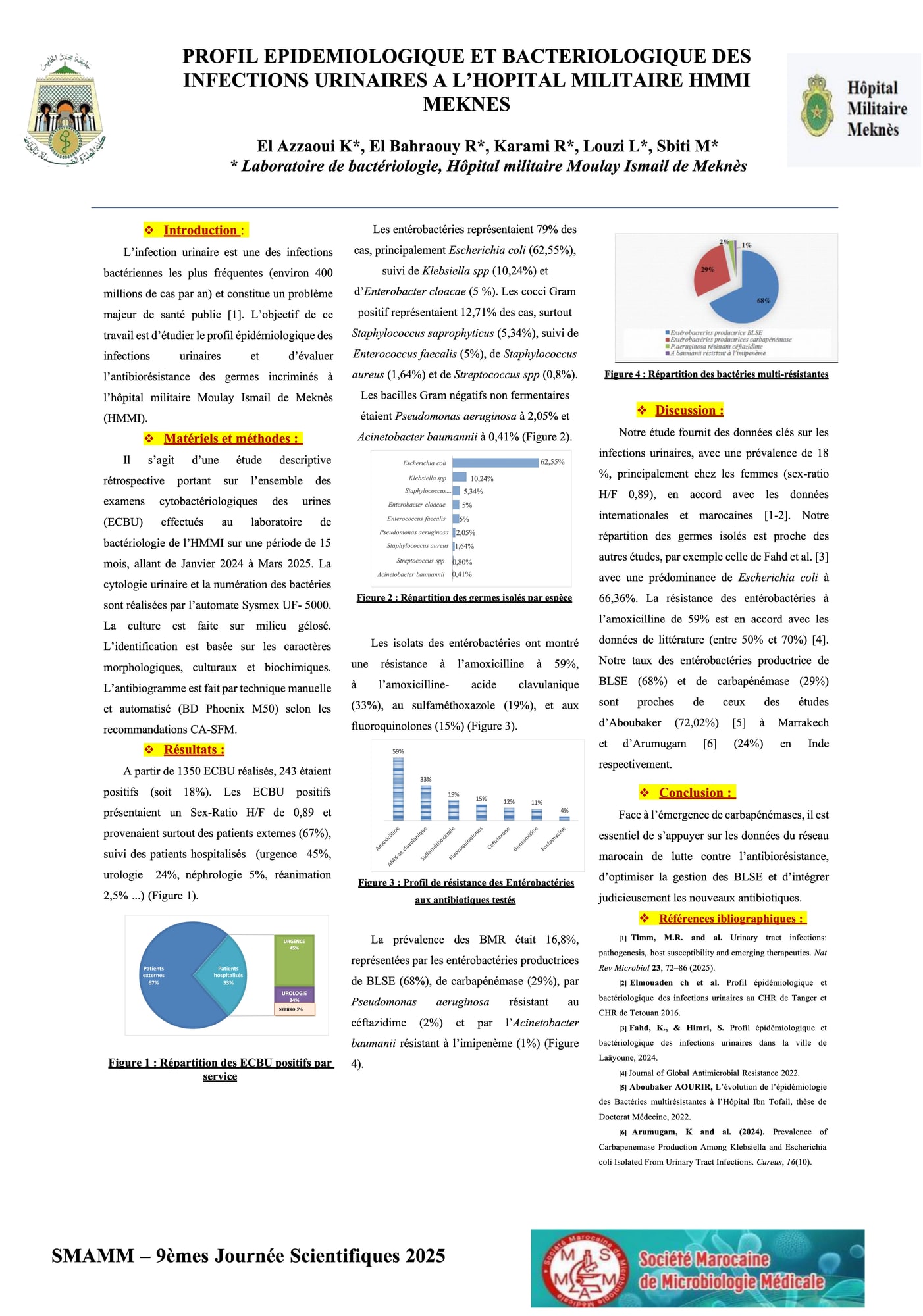 MicrobiologyEpidemiological and bacteriological profile of urinary tract infections at the Military Hospital HMMI MeknesK. El Azzaoui, R. El Bahraouy, R. Karami and 2 others
 MicrobiologyOtomycosis diagnosed at the Mohammed V Military Teaching Hospital in RabatH. Goura, M. Laarabi, N. Errami and 3 others